
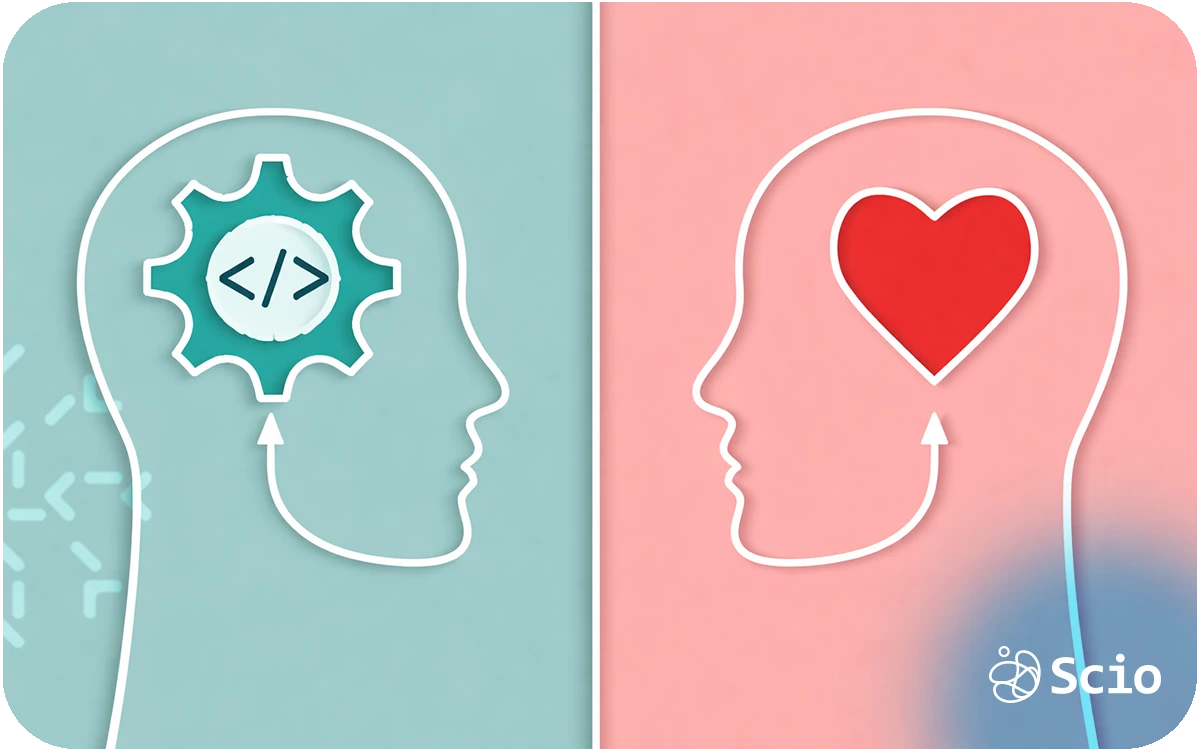
When people think about software engineering, they usually picture code. Programming languages. Frameworks. System architecture. Complex algorithms. These elements are essential, but anyone who has worked inside a real engineering team understands something important.
Great software is never built by code alone. It is built by people. Behind every successful product is a group of engineers collaborating, reviewing ideas, solving problems together, and continuously learning from each other. Technical knowledge is critical, but the way people interact often determines whether a project moves forward smoothly or struggles. That is why emotional intelligence is becoming one of the most valuable skills in modern engineering teams.
TABLE OF CONTENTS
What Is Emotional Intelligence in Software Engineering?
Emotional intelligence in software engineering refers to the ability to understand emotions, communicate effectively, and collaborate productively with others while building technology.
It includes skills such as self-awareness, empathy, active listening, and the ability to navigate challenges within a team environment. Engineers who develop emotional intelligence often work more effectively with teammates, stakeholders, and clients. They help create environments where feedback is constructive and ideas can be discussed openly.
In collaborative engineering environments, these abilities have a direct impact on team performance and software quality. Research published by Harvard Business Review consistently shows that psychological safety and interpersonal trust are among the strongest predictors of high-performing team outcomes, often outweighing individual technical skill in sustained delivery contexts.
Why Emotional Intelligence Matters in Software Development
Software development is inherently collaborative. Engineers regularly work with product managers, designers, QA specialists, technical leaders, and sometimes directly with clients. Each role brings different perspectives and priorities. Technical expertise alone does not guarantee smooth collaboration.
Engineers also benefit from the ability to:
- Communicate complex technical ideas clearly to non-technical stakeholders
- Understand different perspectives during design discussions and architecture reviews
- Provide constructive feedback in code reviews without creating unnecessary tension
- Stay composed and adaptive when requirements change mid-sprint
- Collaborate effectively across cultures, locations, and time zones
When engineers bring these skills into their work, teams operate more smoothly. Communication becomes clearer, feedback becomes more useful, and conflicts are resolved faster. Over time, this improves both team productivity and the quality of the software being delivered.
The connection between team dynamics and delivery quality is well-documented. The DORA State of DevOps Report consistently identifies generative culture and psychological safety as key predictors of high software delivery performance, alongside technical practices like CI/CD and testing.
Technical Skills and Emotional Intelligence: Two Sides of the Same Team
Engineering excellence depends on both technical capability and interpersonal awareness. These two skill sets are not in competition. They support each other in building high-performing teams.
| Dimension | Technical Skills | Emotional Intelligence |
| Primary focus | Code quality, architecture, system performance | Communication, collaboration, trust |
| Typical activities | Coding, debugging, designing systems | Mentoring, giving feedback, conflict resolution |
| Impact on teams | Improves reliability and scalability | Improves collaboration and productivity |
| Role in leadership | Supports technical decision-making | Builds trust and team alignment |
| Long-term value | Builds strong systems | Builds strong engineering teams |
Teams that combine strong technical expertise with emotional intelligence often move faster and maintain healthier team dynamics. They are better equipped to handle the ambiguity, pressure, and rapid change that characterizes modern product development.
The Human Side of Engineering
Technology ultimately exists to solve human problems. Whether engineers are building enterprise platforms, mobile applications, or internal tools, the goal is always to create solutions that help people do their work more effectively.
Empathy helps engineers understand those people. When developers consider how users actually interact with technology, they can design systems that are easier to use and more aligned with real needs. This is not just a design principle. It is an engineering discipline that produces better outcomes.
Empathy also strengthens collaboration inside engineering teams. When engineers understand each other's perspectives, discussions become more productive and trust develops naturally. Some of the strongest engineering teams I have seen combine technical expertise with genuine respect for the people around them. That combination is not accidental. It is the result of deliberate attention to how people interact.
Emotional Intelligence in Distributed Engineering Teams
The way engineering teams work today makes emotional intelligence even more important. Many organizations operate with distributed teams across cities, countries, and time zones. Engineers often collaborate remotely with colleagues they have never met in person.
In these environments, communication and trust become essential. Small misunderstandings can quickly grow into larger problems when teams lack emotional awareness. A rushed comment in a code review or an unclear message in a chat channel can create unnecessary tension that slows the entire team down.
Engineers who approach conversations with curiosity and openness help prevent these situations. They create environments where teammates feel comfortable asking questions, sharing ideas, and acknowledging mistakes without fear of judgment. This type of environment supports faster learning and healthier collaboration over the long term.
For nearshore and distributed teams specifically, emotional intelligence is not a soft skill that gets addressed when time allows. It is a functional requirement for making the collaboration model work. The overlap in time zones and working hours that nearshore engineering provides creates the conditions for real-time interaction, but the quality of that interaction depends on the emotional awareness each engineer brings to it.
Emotional Intelligence as a Career Multiplier
For engineers, emotional intelligence often becomes more important as their careers progress. Technical expertise opens opportunities, but long-term growth frequently depends on how well someone works with others.
Engineers who develop emotional intelligence are often better prepared to:
- Mentor junior developers in ways that build confidence rather than dependency
- Lead cross-functional initiatives where technical and non-technical teams need to align
- Build trust with stakeholders and clients by communicating with clarity and consistency
- Navigate complex technical discussions inside teams without letting disagreement become conflict
These abilities help engineers move from individual contributors to leaders who shape how teams operate. The transition from senior engineer to tech lead, which many engineers find unexpectedly challenging, is often primarily an emotional intelligence challenge rather than a technical one. For more on that transition, see Tech Lead Anxiety: 5 Real Causes Engineering Leaders Ignore.
How Scio Encourages the Development of Soft Skills
At Scio, strong engineering teams are built by investing in both technical skills and human capabilities. Communication, leadership, and collaboration are essential parts of how teams perform.
One initiative that supports this development is Scio Elevate Mentorship, where experienced Scioneers share knowledge and guidance with teammates who want to grow. Programs like this help encourage continuous learning, constructive feedback, stronger collaboration, and professional development.
Coaching and mentorship create a space where engineers can reflect on challenges, discuss team dynamics, and strengthen the interpersonal skills that help teams succeed. Growth at Scio is not only about becoming a stronger developer. It is also about becoming a stronger teammate and collaborator.
For more on how coaching skills directly affect engineering team performance, see Your Dev Team Needs Coaching Skills.
Frequently Asked Questions
u003cstrongu003eWhat is emotional intelligence in software engineering?u003c/strongu003e
Emotional intelligence in software engineering refers to the ability to understand and manage emotions, communicate effectively, and collaborate productively within a technical team environment. It includes self-awareness, empathy, active listening, and conflict resolution. While technical skills determine what an engineer can build, emotional intelligence shapes how well they work with others while building it.
u003cstrongu003eWhy is emotional intelligence important for developers?u003c/strongu003e
Software development is a deeply collaborative discipline. Developers work daily with product managers, designers, QA specialists, and clients, each with different priorities and communication styles. Emotional intelligence helps engineers communicate complex ideas clearly, provide constructive feedback without creating friction, stay adaptive when requirements change, and build the trust that allows distributed teams to function effectively.
u003cstrongu003eCan emotional intelligence improve software quality?u003c/strongu003e
Yes, indirectly but meaningfully. Teams with high emotional intelligence communicate more clearly, which reduces the misunderstandings that lead to rework. Code reviews become more constructive, which improves the quality of what gets merged. Conflict resolves faster, which protects delivery momentum. Research from Google's Project Aristotle found that psychological safety, a direct product of emotional intelligence in team environments, was the single strongest predictor of team effectiveness.
u003cstrongu003eHow can engineers develop emotional intelligence?u003c/strongu003e
Emotional intelligence develops through intentional practice and reflection. Mentorship programs like Scio Elevate create structured opportunities for engineers to observe, discuss, and apply interpersonal skills in real work contexts. Coaching conversations help engineers recognize patterns in how they communicate and respond under pressure. Reading, self-assessment tools, and simply asking for honest feedback from trusted colleagues are also effective starting points.
Software Is Created by People, for People
Technology continues to evolve rapidly. New tools are helping automate repetitive tasks and assist engineers in writing code more efficiently. Artificial intelligence is already supporting parts of the development process.
As these tools evolve, the human aspects of engineering become even more valuable. Creativity. Communication. Empathy. Collaboration. These skills help teams solve complex problems and build technology that truly serves people.
At Scio, we believe that building great software begins with building strong teams. Emotional intelligence plays a key role in helping engineers collaborate, grow, and deliver meaningful results. Because in the end, software is created by people, for people.
If you are thinking about how your engineering team can grow in both technical and interpersonal capability, our team at Scio is happy to share what we have learned.
References and Further Reading
- Harvard Business Review, Emotional Intelligence and Team Performance Research — Research on how psychological safety, trust, and interpersonal awareness predict high-performing team outcomes in knowledge-work environments. hbr.org
- DORA (DevOps Research and Assessment), "State of DevOps Report" — Annual research identifying generative culture and psychological safety as key predictors of high software delivery performance alongside technical practices. dora.dev
- Google re:Work, Project Aristotle Research — Google's team effectiveness research identifying psychological safety as the single strongest predictor of team success, above individual technical skill and other factors. rework.withgoogle.com
- Gallup, "State of the Global Workplace Report" — Research on employee engagement, trust, and the organizational conditions that allow knowledge workers to perform at their best. gallup.com
- MIT Sloan Management Review, Organizational Behavior and Team Dynamics — Research on how interpersonal dynamics, communication patterns, and emotional awareness affect team performance in distributed and technical work environments. sloanreview.mit.edu
- American Psychological Association, Emotional Intelligence Research — Scientific literature on the measurement, development, and organizational impact of emotional intelligence in professional contexts. apa.org
- Stack Overflow Developer Survey 2024 — Developer perspectives on team collaboration, mentorship, and the interpersonal factors that most affect job satisfaction and team effectiveness. survey.stackoverflow.co
- Scio blog, "Tech Lead Anxiety: 5 Real Causes Engineering Leaders Ignore" — How the emotional and interpersonal demands of the tech lead role create challenges that technical expertise alone does not prepare engineers for. sciodev.com
- Scio blog, "Your Dev Team Needs Coaching Skills" — Why coaching capabilities directly affect engineering team performance, knowledge sharing, and the quality of mentorship within engineering organizations. sciodev.com