
Programming has always carried a magnetic quality for people who enjoy solving problems and building things that work. Good engineering blends logic, creativity, rigor, and curiosity in a way few other disciplines can match. But one question sits quietly behind the keyboards, IDEs, and cloud environments of modern development: is programming strictly a digital activity?
For many engineers, LEGO was the original gateway. The link between these small plastic bricks and the mental models of software development is stronger than it appears. Understanding why helps highlight the way humans naturally think about systems, physical or digital, and why programming feels intuitive to so many people who grew up building worlds from a pile of modular parts. This article explores whether LEGO can be considered a programming language in any meaningful sense, and what that question reveals about how engineering leaders think about systems.
TABLE OF CONTENTS
1. Programming as a Physical Skill
Programming is often described as abstract, an activity that takes place behind the screen, governed by invisible rules and structures. Yet the core mechanics of programming are deeply physical. Programmers assemble instructions, build flows, and structure logic in highly modular ways. The final output may be digital, but the thought process is rooted in spatial reasoning and pattern assembly.
This is why many developers describe programming as building with conceptual bricks. Each line of code snaps into place with another. Functions connect to classes, services connect through APIs, and systems take shape as small, well-defined units form a coherent whole. LEGO offers a surprisingly accurate physical analogy. Every LEGO structure begins with a handful of simple units that follow a strict connection logic. Bricks either fit or they do not. Their orientation changes their meaning. Their combination creates new capabilities. As in programming, constraints define creativity.
When engineers build with LEGO, they engage many of the same mental muscles they use when writing software:
- Decomposing complex ideas into smaller units
- Testing structural stability and iterating quickly
- Recognizing patterns and repeated solutions
- Adapting designs through constraints
- Thinking in systems, not isolated pieces
Long before anyone wrote Java, Python, or C, humans were already structuring their environment by creating modular representations of ideas. LEGO is not software, but it teaches the same logic that makes software possible. For engineering leaders, this reinforces a truth often forgotten in technical environments: programming is not just a digital discipline. It is a way of thinking, a mental framework that thrives regardless of medium.
2. Is LEGO a Programming Language? The Binary Argument
One of the most intriguing ideas in Douglas Coupland's Microserfs is that LEGO functions as a binary language. Each stud on a brick is either connected to another brick or it is not, a fundamental yes/no state that echoes the foundation of computing. While real computing logic is far more complex, this binary framing matters because it reveals how humans intuitively understand programmable systems.
A LEGO model is, in essence, a set of instructions made physical. A programmer writes code to produce a specific output; a builder assembles bricks to produce a physical model. In both cases, the rules of the system dictate what can and cannot be done. The similarity goes further:
- Syntax and brick geometry: Code requires correct syntax; LEGO requires correct alignment and fit.
- Logic and build sequence: Programs follow logical flow; LEGO instructions guide step-by-step dependencies.
- Debugging and structural testing: Fixing a function mirrors fixing a weak section of a LEGO model.
- Abstraction and modular subassemblies: A LEGO wing or engine is a reusable component, much like software modules.
Critics argue LEGO lacks abstract operations, recursion, or branching logic. But that criticism misunderstands the comparison. LEGO is not a programming language in the formal sense. It is a system that teaches the cognitive structures behind programming. And this matters for organizations building engineering talent. Research on early STEM education shows that tactile, modular play strengthens systems thinking, a key predictor of success in computer science, architecture, and engineering disciplines.
3. Before Digital Code: Analog Machines as Early Programmers
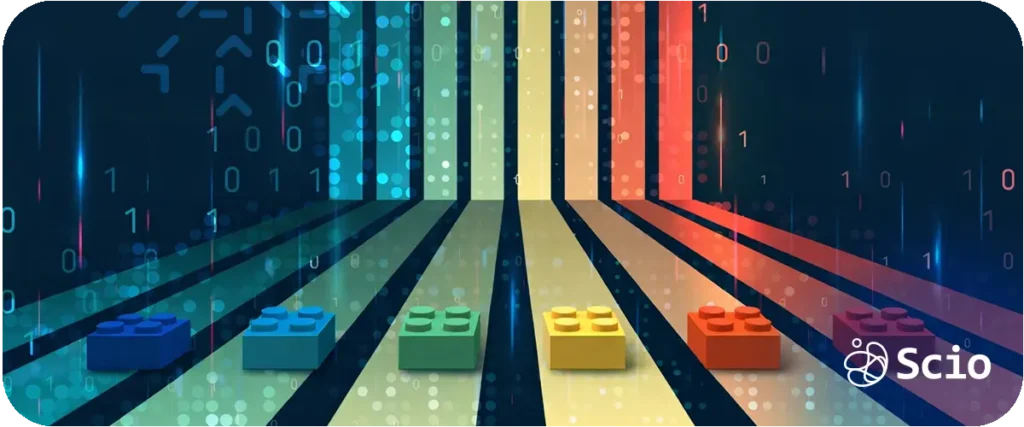
Many people assume programming began with early computers, but the instinct to encode behavior into physical machines dates back centuries. Analog computers, from tide calculators to navigational instruments to agricultural predictors, were built around the same principle as software: apply inputs, transform them through rules, and produce predictable outputs. These machines did not rely on text, syntax, or compilers. They used fluid pressure, rotational gearing, electrical currents, variable resistances, and mechanical memory.
Engineers built these systems by assembling physical components that behaved according to precise rules. Consider a mechanical differential analyzer. Engineers would connect gears to represent equations. The machine executed the equations by rotating the gears in a specific relationship. Connecting two gears incorrectly produced incorrect results, a physical bug. This analog history shows that programming is not tied to digital tools. It is the art of building rule-driven systems.
Both LEGO and analog machines reveal a consistent truth: humans have always built modular systems to solve problems long before digital programming existed. The shift from analog to digital merely changed the medium, not the underlying way engineers think. For modern CTOs and engineering leaders, this perspective highlights why onboarding new engineers is not just about learning syntax. It is about learning how systems behave.
4. Programming as a Universal Language
If programming appears everywhere, in LEGO, analog devices, mechanical calculators, and modern software, then programming is not simply a technical discipline. It is a conceptual framework for understanding how systems function. When you build with LEGO, you are learning how constraints guide creativity, how structure affects stability, how complex results emerge from simple rules, how modularity accelerates innovation, and how to iterate, test, and refine.
These are the same lessons engineers apply when designing scalable architecture, improving legacy systems, or building cloud-native services. Programming has become so fundamental across industries because the world increasingly runs on modular, interconnected systems, from microservices to manufacturing automation to logistics networks. Whether these systems are written in code or assembled physically, the underlying logic is the same: define clear rules, build reliable components, connect them effectively, and adapt through iteration.
As Douglas Coupland captured it in Microserfs: "LEGO is a potent three-dimensional modeling tool and a language in itself." A language does not need words to shape thinking. LEGO teaches the grammar of modularity. Analog computers teach the grammar of computation. Modern programming languages teach the grammar of abstraction.
LEGO vs. Programming: A Side-by-Side Comparison
| Concept | LEGO | Programming |
| Basic unit | Brick | Instruction / line of code |
| Rules | Physical fit constraints | Syntax and logic constraints |
| Output | Physical model | Digital behavior or system |
| Modularity | Subassemblies, repeatable patterns | Functions, modules, microservices |
| Debugging | Fix structural weaknesses | Fix logical or runtime errors |
| Creativity | Emerges from constraints | Emerges from structure and logic |
5. Why the LEGO Analogy Still Resonates With Developers Today
Even in a world of containerization, distributed systems, AI-assisted coding, and complex cloud platforms, the LEGO analogy remains surprisingly relevant. Modern engineering organizations rely heavily on modular architectures, from microservices to reusable components to design systems. Teams succeed when they can break work into manageable pieces, maintain cohesion, and understand how individual parts contribute to the whole.
A large LEGO model is built by assembling subcomponents: wings, boosters, towers, foundations. Each subcomponent has its own clear structure, interfaces, and dependencies. When built correctly, these pieces connect easily. This mirrors well-designed software architectures where each part is cohesive, testable, and aligned with a clear purpose.
For engineering leaders, LEGO thinking helps teams clarify system boundaries, reinforces the principle that everything is a component, underscores the value of structure and predictability, strengthens the expectation that systems evolve through iteration, and frames complexity as something that can be built step by step. Most importantly, LEGO teaches that breaking things down is not a limitation. It is the foundation of scalable systems.
What This Means for Engineering Leaders
The question of whether LEGO is a programming language is less important than what the analogy reveals about how strong engineers think. The modern challenges facing CTOs, technical debt, system drift, communication overhead, and integration complexity, are ultimately problems of structure. Teams that think modularly navigate these challenges more effectively.

Mid-market software companies
For mid-market software companies this insight has practical implications for hiring, onboarding, and architecture reviews. Engineers who think in systems, who instinctively decompose complexity into bounded, testable components, produce more maintainable codebases and make better architectural decisions. When evaluating candidates or structuring engineering teams, the cognitive approach matters as much as the specific technology stack.
A nearshore dedicated engineering team composed of engineers with strong systems thinking reduces the architectural coordination overhead that slows mid-market teams down.
PE-backed software portfolios
For PE-backed software portfolios the LEGO analogy directly maps to the modernization challenges that show up during integration and platform standardization. Systems that were built without modular design principles are harder to extend, harder to integrate, and harder to hand off across PortCo boundaries. Investing in engineers who think modularly and bringing in nearshore partners with strong architectural discipline reduces the integration complexity that derails roll-up theses.
Programming is not just something we do. It is a way we think. If you want to discuss how to build engineering teams that approach complexity with this kind of structural discipline, our team at Scio would be glad to talk.
Frequently Asked Questions
Is LEGO technically a programming language?
Not in the formal sense, but it mirrors the logic, structure, and modularity found in robust programming languages. LEGO blocks serve as physical primitives that can be combined into complex systems through defined interfaces. The cognitive skills LEGO builds, decomposition, abstraction, constraint-based thinking, and iterative refinement, are the same skills that strong programmers apply when designing maintainable systems.
Why do so many developers relate to LEGO?
Because LEGO reinforces the same cognitive skills that professional programming requires: decomposition of complex problems into bounded components, pattern recognition, abstraction, and iterative refinement. Engineers who grew up building with LEGO often describe programming as familiar territory precisely because the underlying logic of modular, constraint-driven construction is identical.
What do analog machines have to do with modern programming?
Analog computers demonstrate that programming logic, the execution of pre-defined instructions to achieve an outcome, predates digital computing by decades. Engineers who built mechanical calculators, tide predictors, and differential analyzers were doing the same conceptual work as software engineers: defining rules, building components, connecting them precisely, and debugging physical errors. This history shows that programming is a way of thinking, not a technology.
How does modular thinking help engineering leaders build better teams?
It provides a clear framework for architectural decision-making, system boundary design, and complexity management that applies across technology stacks. Teams with strong modular thinking produce codebases that are easier to extend, safer to modify, and more predictable to scale. Engineering leaders who explicitly develop this capability in their teams, through code reviews, architecture sessions, and mentorship programs, create compounding advantages in delivery quality and technical debt management.
How does the LEGO analogy apply to modern software architecture challenges?
Directly. The technical debt, system drift, and integration complexity that CTOs most frequently cite as delivery obstacles are fundamentally problems of structure rather than talent or tooling. Systems that were not designed with modular principles accumulate complexity at component boundaries, create knowledge concentration risks, and resist the kind of incremental modernization that slice-based improvement programs require. The LEGO analogy makes this structural reality accessible and actionable for both technical and non-technical stakeholders.
Programming Is How We Think, Not Just What We Do
From LEGO bricks to analog machines to modern software stacks, humans consistently build and understand the world through modular, rule-driven systems. Whether LEGO is a programming language in a formal sense matters less than what the analogy reveals: programming is the latest expression of a way of thinking that predates computers by centuries.
For engineering leaders building teams that can navigate complex architectures, this matters. High-performing engineers see the world through systems. They think in patterns, components, and relationships. And they refine those systems with care. Remembering that connection helps ground technical work in something intuitive, accessible, and fundamentally human.
If you want to discuss how to build engineering teams that bring this kind of structural thinking to your most complex delivery challenges, our team at Scio would be glad to talk.
References and Further Reading
- Douglas Coupland, Microserfs (1995). Novel that articulated the cultural and cognitive relationship between LEGO construction and software development, providing the foundational literary reference for the article's central argument. https://www.penguin.co.uk/books/326474/microserfs-by-coupland-douglas/9780006547587
- MIT Media Lab, Constructionist Learning Research. Research on constructionist learning theory, including how tactile, modular play strengthens systems thinking and spatial reasoning skills that predict success in computer science and engineering. https://www.media.mit.edu/
- LEGO Education, STEM Learning and Computational Thinking. Research and educational resources on how LEGO-based learning develops computational thinking, pattern recognition, and the modular reasoning skills that underpin software engineering. https://education.lego.com/
- IEEE, Software Architecture and Modularity Standards. Technical standards and research on the modular architecture principles that make software systems maintainable, scalable, and adaptable, directly connecting to the structural logic the LEGO analogy illustrates. https://www.ieee.org/
- Stanford HAI, Artificial Intelligence Index and STEM Education Research. Research on the cognitive foundations of computational thinking and the educational practices that develop the systems-thinking capabilities most associated with engineering performance. https://aiindex.stanford.edu/
- Martin Fowler, Patterns of Enterprise Application Architecture. Authoritative reference on the software architecture patterns, modular design principles, and component-based thinking that the LEGO analogy illuminates for engineering leaders. https://martinfowler.com/
- ACM, Computing Education and Cognitive Skill Development Research. Academic research on the cognitive skills that predict success in computer science, including spatial reasoning, decomposition, and pattern recognition that tactile building activities like LEGO develop. https://www.acm.org/
- Scio blog, Bus Factor Engineering Teams: 5 Proven Ways to Reduce Risk. How modular team structure and knowledge distribution, concepts parallel to modular code design, reduce the systemic risk that concentrated knowledge creates in engineering organizations. https://sciodev.com/blog/bus-factor-engineering-teams/
- Scio blog, Software Engineering Culture: 5 Patterns That Actually Work. How engineering cultures that value structural thinking, iterative refinement, and shared ownership produce the delivery quality that the LEGO analogy describes at a cognitive level. https://sciodev.com/blog/software-engineering-culture/