
When you lead an engineering organization, choosing the right development partner is more than a procurement decision. It is a bet on quality, culture, predictability, and the ability to deliver at the pace your roadmap demands. That is why external validation still plays an important role, especially in a crowded market where every vendor claims to be world-class.
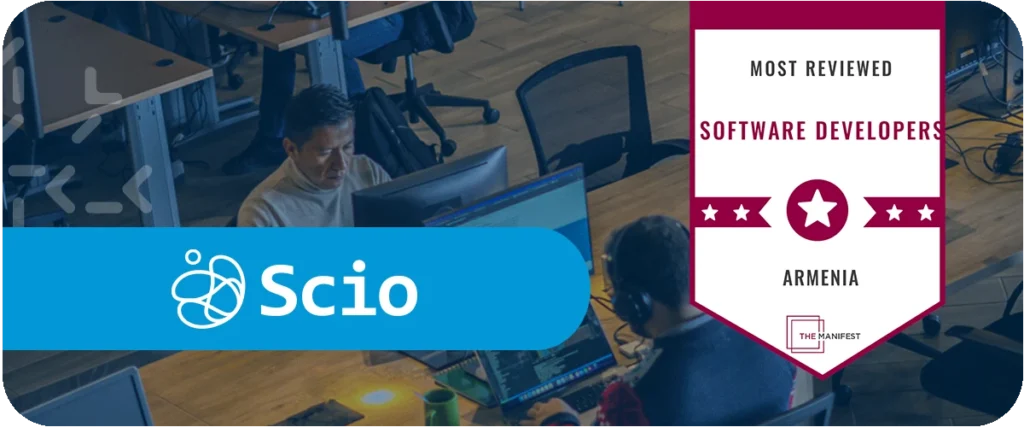
This year, Scio was named one of The Manifest's Most Reviewed Software Developers in Mexico, a recognition that lands at the intersection of reputation, outcomes, and consistent delivery. For CTOs, VPs of Engineering, and product leaders searching for a dependable nearshore software development Mexico partner, this acknowledgment brings clarity backed by real client feedback. It signals that teams working with Scio do not just complete projects. They return, refer, and stay.
TABLE OF CONTENTS
What The Manifest Recognition Really Represents
Awards are common in the software industry, but The Manifest's methodology stands out because its ranking is tied directly to client reviews and verified outcomes, not paid placements or marketing submissions. For engineering leaders, this is meaningful. It shows how consistently a partner performs across multiple engagements, and how often clients are willing to put their name behind that experience.
When Scio appears as one of the Most Reviewed Software Developers in Mexico, what is being recognized is our ability to deliver:
- Software products that meet real-world engineering constraints
- Predictable collaboration across distributed teams
- Strong alignment with U.S. engineering culture and expectations
- Long-term value instead of one-off vendor relationships
Scio's recognition reflects a track record shaped by two decades supporting companies building enterprise applications, SaaS products, internal platforms, and modernization initiatives. The award also highlights consistency. It is not based on one large success, but many. Engineering leaders across multiple sectors offered reviews because Scio repeatedly delivered teams who integrate well, stay aligned, and contribute to the full lifecycle of software delivery.
Why Engineering Leaders Choose Nearshore Teams for Modern Software Delivery
Engineering leaders today face intense pressure: shorter release cycles, legacy platforms needing modernization, talent shortages in key roles, and increased expectations around security, quality, and resilience. Nearshore collaboration has become a strategic answer to those realities.
For many U.S. technical leaders, teams in Mexico offer a balance that offshore regions struggle to match:
- Shared time zones reduce friction during standups, design sessions, and code reviews.
- Cultural alignment creates more natural collaboration rhythms.
- Partner maturity increases predictability and reduces delivery risk.
- Proximity supports stronger visibility and faster onboarding.
Scio's model fits directly into this shift. Instead of providing generic staffing, we deliver high-performing, stable engineering teams built intentionally for long-term collaboration. From frontend and backend development to QA, DevOps, and product support, teams are structured to integrate with U.S. engineering practices and communication styles.
5 Proofs: Inside Scio's Delivery Model

Proof 1: High-performing engineering teams
Our teams are built to reduce friction and help product leaders move faster. Scio invests heavily in skills, processes, and internal training paths, including ScioElevate, so developers remain current with modern frameworks, architectures, testing practices, and security expectations. Clients emphasize that Scio engineers do not just code. They review architecture, challenge assumptions when needed, and contribute meaningfully to planning, retrospectives, and quality improvements.
Proof 2: Clear communication and cultural alignment
Real-time collaboration matters. Engineering leaders consistently highlight Scio's ability to work in sync with U.S. teams, reflecting communication standards that feel familiar and predictable. Time zone alignment removes the delays that offshore teams face, especially during critical phases like grooming, sprint planning, or release coordination.
Proof 3: Long-term team stability
Turnover is one of the biggest risks in software delivery. Scio addresses this by investing in retention programs, growth opportunities, and a culture where engineers stay for the long run. This stability becomes a major advantage for engineering leaders who need continuity across multi-year roadmaps.
Proof 4: Verified client reviews, not marketing claims
The Manifest's recognition methodology is based on verified, detailed client feedback across multiple engagements. The clients behind these reviews come from SaaS, fintech, healthcare, logistics, education, and enterprise technology. Their feedback consistently points to the same themes: Scio integrates into their engineering workflow as an extension of their team, developers demonstrate ownership of outcomes, and the partnership feels reliable and long-term.
Proof 5: Two decades of delivery consistency
Since 2003, Scio has focused on one objective: help ambitious organizations strengthen their engineering output and make collaboration feel natural. This longevity is not accidental. It reflects a consistent approach of earning trust through results, building long-term relationships, and adapting to how engineering organizations actually need to work.
Scio vs. Typical Offshore Vendors: What Clients Highlight
| Factor | Scio Nearshore Teams | Typical Offshore Vendors |
| Time zone alignment | Full overlap with U.S. teams | Limited, often early-morning or late-night overlap |
| Communication | Clear, fast, culturally aligned | Delayed, asynchronous, often inconsistent |
| Team stability | High retention, long-term engineers | Higher churn, rotating staff |
| Integration with internal teams | Seamless and collaborative | More transactional |
| Engineering quality | Senior, vetted, product-oriented | Variable across vendors and engagements |
A Recognition Built on Client Trust
Reviews do not appear unless clients feel strongly enough to write them. The Manifest's recognition reflects clients who were willing to share detailed, transparent insights about their experience. Their feedback points to consistent themes: Scio integrates into their engineering workflow as an extension of their team, communication is proactive rather than reactive, developers demonstrate ownership of outcomes, delivery remains steady as product needs evolve, and the partnership feels reliable and long-term, not transactional.
This aligns with Scio's operating philosophy: earn trust, deliver consistently, and build relationships that last. In an industry where reliability is often promised but rarely proven, this kind of recognition, grounded in client voices, becomes a differentiator that engineering teams can count on when selecting a nearshore software development Mexico partner.
What This Means for PE-Backed Portfolios and Mid-Market Software Companies

Mid-market software companies
For mid-market software companies the choice of a nearshore engineering partner directly affects roadmap execution, team stability, and the ability to scale capacity without the overhead of full-cycle recruitment. Scio's recognition from The Manifest provides the kind of third-party validation that simplifies a decision that carries real organizational risk. Long-tenure client relationships across sectors show that Scio works across different product contexts and team structures, not just one specific engagement model.
PE-backed software portfolios
For PE-backed software portfolios and software holding companies, a nearshore engineering partner with demonstrated consistency and cultural alignment reduces one of the most common sources of integration risk: the partner who cannot keep pace with the acquisition-driven growth plan. Scio's dedicated engineering teams integrate into existing engineering organizations and support modernization, platform standardization, and capacity scaling across portfolio companies. If you are evaluating options for expanding your development capacity, our team is ready to support your next step.
Frequently Asked Questions
What does being "Most Reviewed" on The Manifest actually mean?
It means Scio received a significant number of verified, high-quality client reviews across multiple engagements, reflecting consistent performance over time. The Manifest's methodology is based on detailed, verified feedback from real clients, not paid placements or self-reported data. For engineering leaders evaluating nearshore partners, this kind of recognition provides third-party validation grounded in actual delivery experience rather than marketing claims.
Why should engineering leaders care about client reviews when selecting a nearshore partner?
Because client reviews reveal how a partner actually performs under real delivery conditions, not how they present in sales processes. The patterns that emerge across multiple reviews, communication quality, team stability, integration ease, and ownership of outcomes, are the factors that determine whether a nearshore relationship creates or reduces operational risk. A partner with many verified reviews across diverse engagements has demonstrated performance consistency that single-client references cannot confirm.
What types of engineering projects does Scio typically support?
Scio supports SaaS platforms, enterprise applications, system modernization initiatives, QA automation, DevOps, complex integrations, and full product lifecycle development. Clients include growth-stage SaaS firms, established U.S. tech companies, PE-backed software businesses, and organizations navigating modernization and capacity scaling challenges. The common thread is that these organizations need engineering teams that integrate as an extension of their internal team, not a transactional staffing relationship.
How does Scio ensure cultural and communication alignment with U.S. engineering teams?
By operating in shared time zones, applying disciplined communication practices, maintaining stable engineering teams with low turnover, and building a collaborative engineering culture refined over more than two decades. Cultural alignment is not a training program at Scio. It is the operational result of hiring engineers who communicate with the directness and accountability that U.S. engineering leaders expect, and retaining them long enough to build the shared context that makes collaboration feel natural.
How does nearshore software development in Mexico compare to offshore alternatives?
The primary advantages are time zone alignment, cultural fit, and partner maturity. U.S. engineering teams working with Mexico-based nearshore partners share working hours, which eliminates the asynchronous delay that offshore relationships create in daily standups, code reviews, design sessions, and incident response. Cultural alignment means fewer communication misunderstandings and a more natural integration into the internal team. Partner maturity, as evidenced by consistent client reviews and long-tenure relationships, determines whether the collaboration compounds value over time or creates ongoing coordination overhead.
A Partnership Built to Last
Scio's recognition as one of The Manifest's Most Reviewed Software Developers in Mexico reflects years of consistent delivery and long-standing partnerships with engineering leaders across the U.S. It is not based on one large success, but many. That consistency is what brings clients back and prompts them to write detailed, transparent reviews.
As we continue to grow, Scio remains committed to the fundamentals that brought this award to life: high-performing teams, transparent collaboration, and a deep respect for the engineering leaders who trust us with their most important initiatives. For organizations evaluating nearshore software development Mexico options, the question is not whether Scio can build software. The question is whether we can become the engineering partner your roadmap depends on.
If you are evaluating options for expanding your development capacity with a nearshore partner you can rely on, Scio is ready to support your next step.
References and Further Reading
- The Manifest, Most Reviewed Software Developers Methodology. The Manifest's ranking methodology for identifying the most reviewed software development companies, based on verified client feedback and delivery outcomes across multiple engagements. https://themanifest.com/
- Clutch, Software Development Company Reviews. Platform for verified B2B service provider reviews, including the client feedback methodology that The Manifest's recognition is built on. https://clutch.co/
- DORA (DevOps Research and Assessment), State of DevOps Report. Research on the delivery practices, team stability factors, and communication models most associated with high software delivery performance in distributed engineering teams. https://dora.dev/publications/
- Nearshore Americas, Mexico Technology Talent Report. Research on Mexico's engineering talent landscape, time zone advantages, cultural alignment with U.S. teams, and the factors that make Mexico a leading nearshore software development destination. https://nearshoreamericas.com/
- McKinsey Global Institute, Talent and the Future of Work Research. Analysis of how engineering talent geography, distributed team models, and nearshore collaboration affect software delivery performance and organizational scalability. https://www.mckinsey.com/
- Harvard Business Review, Distributed Team Performance and Cultural Alignment. Research on the communication practices, cultural alignment factors, and team stability elements that determine whether distributed engineering relationships create or reduce organizational performance. https://hbr.org/
- Scio blog, Moving from Offshore to Nearshore: 5 Proven Execution Wins. Practical comparison of offshore and nearshore models illustrating the specific operational advantages that time zone alignment, cultural fit, and partner maturity create for engineering leaders. https://sciodev.com/blog/moving-from-offshore-to-nearshore/
- Scio blog, Nearshore Development Partner: How to Choose the Right One. Framework for evaluating nearshore engineering partners based on the criteria that actually affect delivery quality, team integration, and long-term relationship value. https://sciodev.com/blog/nearshore-development-partner/