
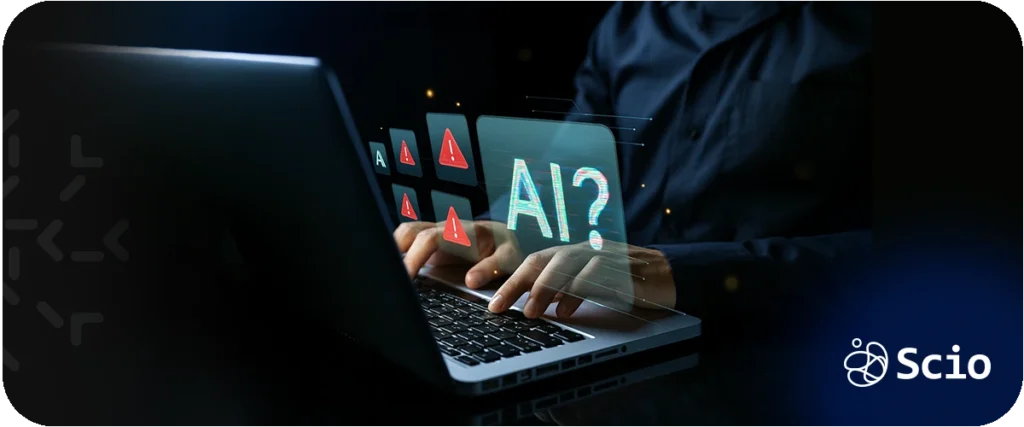
There is a post on Reddit that asks: "When should you stop vibe coding?" The top comment replies: "When people are paying for it. When you care about security." That response stuck with me, not because it is clever, but because it is brutally true. Every experienced developer knows the rush of flow mode. That perfect rhythm where you are coding fast, skipping tests, letting intuition, or now AI, fill the gaps. Until the pager goes off. And suddenly you are staring at a production incident caused by code you barely remember writing.
Because the truth is simple: AI can write code, but it will not be there when it breaks. The vibe coding production risks that seem abstract during development become very concrete the moment real users, real payments, or real data enter the picture.
Table of Contents
The Illusion of Effortless Flow
With tools like GitHub Copilot or ChatGPT, the flow state feels even more powerful. You describe what you need and the screen fills with code that almost looks perfect. It is intoxicating. You move faster than ever. You skip the small things because the AI seems to have your back. For a moment, coding feels frictionless.
But that is the problem. It is an illusion. Vibe coding feels good because it hides the pain points that keep systems reliable: testing, validation, documentation, and deep architectural thought. Those steps are not glamorous, but they are what keep things from falling apart later. The AI can fill in syntax, but it cannot fill in judgment. And judgment is what real engineering is built on.
From Hobby to High Stakes: When the Rules Change
There is a clear line between experimenting for fun and building something people rely on. When it is your weekend project, vibe coding is harmless. If it breaks, you shrug and move on. But once real users, payments, or operational expectations enter the picture, the stakes change. What mattered before was momentum. What matters now is consistency.
AI-generated code often looks functional, but the decisions made during the early, experimental phase can ripple outward in ways that are not obvious at first. Temporary solutions become permanent. Assumptions turn into constraints. A quick fix becomes a hidden dependency. That is when these risks shift from energizing to expensive, because every shortcut taken early tends to resurface later with interest.
The Psychology Behind Instant Feedback
Part of what makes vibe coding so appealing has nothing to do with speed or convenience. It is rooted in how the human brain responds to instant feedback. When an AI tool suggests code that fits your intent, it creates a fast reward loop that keeps you moving without pausing to evaluate your decisions.
AI removes the friction that normally forces us to think: naming things carefully, verifying assumptions, or reconsidering design choices. Those micro-pauses are where engineering discipline begins, and AI eliminates them almost too well. Not because the code is better, but because the process feels easier. It encourages motion without reflection, output without ownership.
The Illusion of Progress Without Accountability
When AI produces something plausible on the first attempt, we tend to assume correctness. But plausibility is not reliability, especially in systems that carry real traffic or store real data. Used intentionally, AI can amplify creativity. Used passively, it creates the illusion of progress while skipping the steps that build durable systems.
Once real users, money, or data are involved, vibe code becomes liability code. It is no longer about how fast you can ship. It is about how safe, stable, and accountable your codebase is when something breaks. That is where engineering maturity, secure practices, and human judgment make all the difference.
The Hidden Cost: Security and Responsibility
AI-generated code looks neat, but it often lacks intent. It mirrors patterns it has seen, not principles it understands. Common security flaws appear because the AI does not reason about context. It just predicts what looks right.
- Weak authentication flows including token exposure
- Silent error handling that hides system failure
- Overly broad permissions or unvalidated inputs
- Copy-paste dependencies without version control awareness
And when something goes wrong, there is no one to ask why it happened. AI does not take responsibility. You do. As a senior engineer once put it: "You do not get paid for writing code. You get paid for what happens when that code runs." AI cannot anticipate the real-world consequences of its suggestions. It does not care about uptime, SLAs, or brand reputation. Accountability still lives with humans, and it always will.
When Prototypes Become Products
There is a moment in every software project when the code stops being yours and becomes something other people depend on. It usually happens quietly, the first real customer signs up, an integration goes live, or the system begins carrying data that actually matters. What changes is not speed. It is expectation.
As features accumulate and services intertwine, architecture reveals its seams. Early shortcuts become invisible dependencies. Temporary fixes become long-term behavior. Logic written for one user ends up serving thousands. Fragility does not always come from bugs. It often comes from decisions that were never revisited. Vibe coding production risks are fundamentally about decisions made when no one thought they were permanent, surfacing precisely when permanence is no longer a choice.
The Human Advantage: Judgment and Experience
Experienced engineers are not valuable just because they know syntax. They are valuable because they know when not to trust it. Experience teaches you that clarity matters more than cleverness, that documentation prevents panic, and that code readability is a kindness to your future self or the person maintaining your feature six months later.
AI does not replace that mindset. It tests it. The best developers use AI to accelerate the routine, not to escape the discipline. Research on human factors in software engineering consistently finds that sustainable code quality depends as much on human collaboration and review as on automation. They treat AI code assistants as fast junior developers: ones who work quickly but need review, guardrails, and context before anything critical reaches production.
Prototype vs. Production: What Really Changes
| Aspect | Vibe Coding (AI-Generated) | Production-Grade Engineering |
| Goal | Get something working fast | Build something that lasts and scales |
| Approach | Trial-and-error with AI suggestions | Architecture-driven, test-backed, reviewed |
| Security | Assumed safe, rarely validated | Explicit validation, secure defaults, compliance-ready |
| Accountability | None: AI generated, hard to trace origin | Full ownership and documentation per commit |
| Outcome | Fast demos, brittle systems | Reliable, maintainable, auditable products |
What This Means for Engineering Leaders
Mid-market software companies
For mid-market software companies the vibe coding production risks described in this article are most acute during phases of rapid feature development, when the pressure to ship creates exactly the conditions where unreviewed AI output reaches production. Leaders who build lightweight review checkpoints into the delivery process, rather than treating code review as optional overhead, protect the codebase from the kind of fragility that surfaces only after customers discover it.
A dedicated nearshore engineering team that integrates AI tooling with structured review practices gives you the speed benefit of AI-assisted development without the accountability gap that vibe coding leaves.
PE-backed software portfolios
For PE-backed software portfolios inherited codebases built heavily on vibe coding practices carry a specific diligence risk: accountability gaps that are hard to trace after the fact, security vulnerabilities that require expensive retroactive remediation, and documentation deficits that slow any integration or modernization initiative. Identifying the depth of AI-generated, unreviewed code in an acquired PortCo is worth including in technical due diligence.
If you want to discuss how to build AI-assisted engineering practices that include the accountability structure this article describes, our team at Scio would be glad to talk.
Frequently Asked Questions
What are the main vibe coding production risks?
The main risks are security flaws in code that was never intentionally designed for security, accountability gaps where no one knows why a decision was made or how to trace a bug to its origin, and structural fragility from assumptions and shortcuts that looked temporary but became permanent. These risks are low when the code only serves you. They become serious the moment the code serves users, carries payments, or stores data that others depend on.
When should a team stop using vibe coding?
When people are paying for it. When security matters. When the system carries real user data or real business logic that cannot be explained by the person who deployed it. The exact boundary varies by context, but the signal is consistent: once the code becomes something other people depend on, the discipline of production-grade engineering is not optional overhead. It is the minimum standard.
Is AI-generated code safe for production use?
Not by itself. AI tools do not understand security or compliance context, meaning without human review they can introduce vulnerabilities and significant technical debt. The output needs to be treated as a draft from a competent but non-accountable contributor, reviewed with at least the same scrutiny as code from a junior developer whose judgment you have not yet fully validated.
How does AI coding affect technical debt?
It can multiply technical debt. AI tends to produce functional but generic and unmaintainable code that lacks the context-specific reasoning that keeps a codebase coherent over time. It avoids refactoring, duplicates patterns, and mirrors what it has seen in training data rather than what is appropriate for the specific system. Without deliberate review and refactoring discipline, AI-assisted development accelerates the same technical debt accumulation that slow development does, just faster and at higher volume.
What is the right way to use AI tools in a production engineering team?
Treat AI like a smart, fast, non-accountable junior developer. Useful for drafts, boilerplate, and suggestions, but always requiring supervision, rigorous human testing, documentation, and review before anything critical merges. The team owns the output the moment it ships. AI does not. Building that ownership expectation explicitly into code review practices, PR templates, and team culture is what separates AI-assisted engineering from AI-delegated engineering.
The Balanced Future of AI in Development
AI is not the enemy. Used well, it is a powerful ally that can remove boilerplate, spark creativity, and let developers focus on higher-level thinking. But every engineer has to draw the line between automation and abdication.
As teams grow and stakes rise, the value of disciplined craftsmanship becomes obvious. Peer reviews, code ownership, secure pipelines, and documentation are not red tape. They are what keep systems alive when humans stop looking. The future of engineering is not AI versus humans. It is AI with humans who understand when to question the output. Because while AI can generate millions of lines of code, only humans can make them make sense.
If you are exploring how to balance AI-assisted development with accountable engineering practices, our team at Scio would be glad to talk.
References and Further Reading
- McKinsey and Company, Unleash Developer Productivity with Generative AI. Research confirming that while AI tools can double coding speed, human oversight remains critical for preventing errors and maintaining code quality. https://www.mckinsey.com/capabilities/tech-and-ai/our-insights/unleashing-developer-productivity-with-generative-ai
- NIST, Secure Software Development Framework. U.S. government framework for building security into software development from the earliest stages, directly relevant to the security discipline this article argues vibe coding bypasses. https://csrc.nist.gov/Projects/ssdf
- DORA Research Program, State of DevOps Report. Research establishing that delivery stability and speed are not in conflict when the right discipline practices are in place, directly relevant to this article's argument that speed without rigor is not sustainable. https://dora.dev/publications/
- IEEE, Human Factors in Software Engineering Research. Academic research establishing that sustainable code quality depends as much on human collaboration and review as on automation, cited in this article's discussion of the human advantage. https://www.ieee.org/
- Scio blog, Vibe Coding Security Risks: 5 Real Threats CTOs Must Know. Complementary analysis focusing on the specific vulnerability categories most common in vibe-built applications, alongside the accountability and production reliability concerns in this article. https://sciodev.com/blog/vibe-coding-security-risks/
- Scio blog, AI Force Multiplier: 5 Fundamentals That Decide Outcomes. Analysis of how AI amplifies existing engineering fundamentals, directly relevant to why vibe coding works in strong hands and creates risk in unprepared ones. https://sciodev.com/blog/ai-force-multiplier-engineering-teams/