

Software supply chain risk used to live at the edge of the organization. In 2026, it runs through the center. Most production software is assembled from third-party services, open-source libraries, cloud infrastructure components, and AI-generated code. That means every production system carries risk layers that no single team fully understands.
For CTOs and Heads of Platform, this shift is not theoretical. It directly affects reliability, regulatory compliance, audit readiness, and long-term architectural integrity. The goal is not to eliminate exposure. It is to understand it, structure it, and manage it with clarity.
TABLE OF CONTENTS
The Invisible Architecture Beneath Modern Software
Very little production software is written entirely from scratch. Most systems are assembled from third-party services, open-source libraries, cloud infrastructure components, and increasingly, AI-generated code and embedded models.
As a result, software supply chain risk no longer sits at the edge of the organization. It runs directly through the center of every production system. Previously, leaders asked whether a vendor was secure. Today, the more relevant question is broader: do we understand the full risk surface of what is running in production?
For engineering leadership, this shift is not theoretical. A vulnerability in a widely used open-source dependency can cascade across transitive chains. An AI-generated function may introduce insecure patterns without clear traceability. A third-party API may embed model-driven behavior that no team member fully understands. Software supply chain exposure has evolved from a procurement concern into a systems-level engineering discipline.
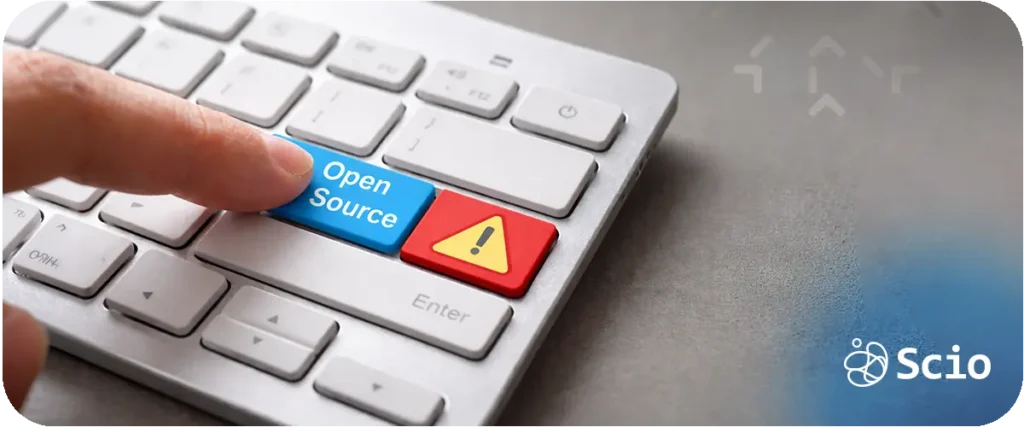
Layer 1: Open Source Dependency Networks
Open source powers modern software. It accelerates development, reduces duplication of effort, and fosters innovation. Yet it introduces a form of risk that is often underestimated: transitive exposure.
When a team installs a single library, it rarely pulls only one component. It may introduce dozens or hundreds of indirect dependencies. These transitive chains create a hidden network of code that few teams fully map or continuously monitor.
Structural risks within open-source dependency networks
- Transitive dependencies that expand silently over time
- Abandoned or under-maintained packages with no active security response
- Delays in applying security patches after vulnerability disclosure
- Licensing complexity across nested components
- Inconsistent version management across services
A widely cited example of cascading vulnerability was the Log4j incident, which demonstrated how deeply a single library can propagate across software ecosystems. Many organizations discovered they were using affected components indirectly, sometimes without awareness. This is where practices such as Software Bills of Materials (SBOMs) become essential. SBOMs provide structured visibility into dependencies, versions, and license obligations, forming the foundation of disciplined supply chain risk management.
Layer 2: Third-Party Vendors and APIs
Third-party APIs introduce a different risk profile than open-source dependencies. Vendor risk management can no longer rely on initial onboarding assessments alone. Vendors evolve. Their internal architectures change. Sub-dependencies shift. The SLA documented at contract signing may not reflect current operational reality.
Modern vendor evaluation must be continuous: ongoing security reassessments, periodic contract and SLA reviews, and active monitoring of architectural changes that affect the risk surface. For engineering teams that have grown through acquisition or rapid scaling, inherited vendor relationships often carry undocumented risk that surfaces only under audit or incident conditions.
Layer 3: AI-Generated Code and Model Risk
The introduction of AI into development workflows adds a distinct layer of software supply chain complexity. AI-generated code can accelerate feature development and assist with refactoring and documentation. However, it also introduces opacity into the engineering lifecycle.
Key risk questions behind AI-generated code
- What training data influenced this output?
- Does the generated logic embed insecure patterns?
- Is the licensing provenance clear?
- Can we trace the reasoning behind specific implementation decisions?
Unlike traditional libraries, AI-generated code often lacks explicit origin attribution. Subtle vulnerabilities or architectural inconsistencies may persist even when developers review and adapt model output. Beyond the code itself, model behavior introduces dynamic risk: model version drift altering output characteristics over time, evolving prompt structures that change implementation patterns, and embedded AI services shifting performance profiles without notice.
For experienced engineering leaders, the solution is not to prohibit AI usage. It is to implement structured governance controls: AI usage policies embedded into engineering standards, mandatory human review before production merges, documentation of model integration points, and clear version tracking for AI-assisted components.
Where These Risks Converge
Individually, third-party vendors, open source, and AI-generated code each introduce manageable exposure. Collectively, they form a dynamic and interconnected system. This convergence is where systemic risk emerges.
AI-generated code may depend on open-source libraries carrying unpatched vulnerabilities. Third-party APIs may integrate embedded AI services whose internal models evolve over time. Teams may inherit legacy dependencies without clear documentation or traceability. The result is production environments that contain components no current team member fully understands. This is not incompetence. It is a function of scale and complexity.
Building a Modern Supply Chain Risk Framework
Effective engineering leaders approach supply chain exposure as a systems discipline. Governance must encompass architecture review processes, dependency visibility and tracking, clear accountability ownership, and structured risk assessment cycles.
| Layer | Traditional Focus | 2026 Risk Evolution | Leadership Response |
| Third-Party Vendors | Contracts and SLAs | Embedded model behavior, API drift, opaque sub-dependencies | Continuous evaluation and operational monitoring |
| Open Source | License compliance checks | Transitive vulnerabilities, patch lag, maintainer fragility | SBOM adoption and automated dependency auditing |
| AI-Generated Code | Minimal governance | Provenance opacity, insecure patterns, traceability gaps | Structured human review and formal AI usage policies |
| Embedded AI Models | Vendor feature assessment | Model version drift, training data opacity, behavior shifts | Model monitoring, version tracking, accountability rules |
What This Means for Engineering Leaders
For mid-market software companies without dedicated security or platform engineering teams, these risk layers accumulate without structured oversight. The most common failure mode is treating supply chain governance as a one-time audit activity rather than a continuous engineering discipline.
Where to start
- Implement SBOM generation for your three most critical production systems first.
- Establish a dependency review cadence rather than waiting for vulnerability disclosures.
- Create a formal AI usage policy before the next major AI-assisted feature reaches production.
- Assign explicit ownership for each third-party integration, not just the original implementer.
Organizations that collaborate with disciplined engineering partners often benefit from structured review cycles and consistent dependency governance already embedded in delivery processes. For related context on managing technical debt alongside supply chain complexity, see Why Technical Debt Rarely Wins the Roadmap.
If your team is building a governance framework from scratch, our engineering team at Scio can support the architecture review and accountability structure required to manage this systematically.

Frequently Asked Questions
Is open source too risky to use in production systems?
No. Open source is foundational to modern software development and remains the right choice for the vast majority of use cases. The risk is not in using open source. It is in using it without visibility and governance. Teams that maintain current SBOMs, monitor transitive dependencies, and have clear patch management processes can use open source safely at scale.
How does AI-generated code affect compliance in regulated industries?
AI-generated code introduces compliance ambiguity in two ways: licensing provenance and traceability. If AI-generated code replicates patterns from open-source repositories under restrictive licenses, organizations may unknowingly incur license obligations. From a traceability perspective, regulated industries increasingly require audit trails for production logic. AI-generated code without documentation of the model version, prompt, and review process creates gaps that audit and compliance teams cannot close after the fact.
What is an SBOM and why is it critical in 2026?
A Software Bill of Materials (SBOM) is a structured, machine-readable inventory of all components, dependencies, and licenses in a software system. In 2026, SBOMs are increasingly required by government procurement standards (the U.S. Executive Order on Cybersecurity mandated them for federal software suppliers) and are becoming standard practice for enterprise vendor evaluation. They provide the dependency visibility that makes supply chain governance actionable rather than theoretical.
Should AI-generated code be restricted in production environments?
Restriction is the wrong framing. Structure is the right one. AI-generated code that goes through mandatory human review, is documented at the model version level, and follows clear usage policies carries manageable risk. AI-generated code that enters production without review, documentation, or accountability is a supply chain liability regardless of how useful it appeared during development.
How do small and mid-market engineering teams manage these risks without a dedicated security function?
Start with the highest-impact, lowest-overhead practices: automated dependency scanning integrated into CI/CD pipelines, a simple AI usage policy that requires human review before merge, and SBOM generation for your most critical systems. These three changes provide significant risk reduction without requiring a dedicated security team. Governance discipline embedded in delivery processes scales more sustainably than a separate security audit function.
What is model version drift and why does it matter?
Model version drift occurs when an embedded AI service or model is updated by its provider, changing output characteristics without explicit notification to the consuming team. For teams that rely on consistent AI behavior in production workflows, this can introduce subtle regressions or unexpected outputs that are difficult to diagnose. Tracking model versions, monitoring output distributions, and establishing performance baselines are the practices that make drift detectable before it affects users.
Governance Is the Differentiator
Responsible engineering in 2026 is defined by transparency. Software supply chain risk cannot be eliminated. It can be structured, monitored, and managed with accountability.
The organizations that handle this well are not the ones with the most sophisticated tooling. They are the ones with the clearest ownership, the most consistent review processes, and the architectural discipline to treat their dependency network as a living system rather than a static list.
That discipline extends to the engineering partners organizations choose to work with. For teams looking to build this governance capacity, our team at Scio works with engineering leaders to design review cycles and accountability structures that hold up under audit.
References and Further Reading
- NIST, Special Publication 800-161 Rev. 1: Cybersecurity Supply Chain Risk Management — U.S. government framework for managing software supply chain risk across acquisition, development, and operations. csrc.nist.gov
- CISA, "Software Supply Chain Security Guidance" — U.S. Cybersecurity and Infrastructure Security Agency guidance on SBOM adoption, dependency management, and supply chain security practices. cisa.gov
- OWASP Top 10 for Large Language Model Applications — Security risk reference specifically addressing AI-generated code, prompt injection, and model behavior risks in production environments. owasp.org
- OpenSSF (Open Source Security Foundation), "Security Scorecard" — Open-source tooling and research for evaluating the security posture of open-source dependencies and maintainer activity. openssf.org
- NVD, CVE-2021-44228 (Log4Shell) — National Vulnerability Database entry for the Log4j vulnerability that demonstrated cascading transitive dependency exposure at global scale. nvd.nist.gov
- NIST, AI Risk Management Framework (AI RMF 1.0) — Framework for managing risk in AI-assisted development, including traceability, governance, and continuous monitoring requirements. airc.nist.gov
- GitHub Security Advisories — Database of security vulnerabilities in open-source packages, used for dependency vulnerability monitoring and patch management. github.com
- Scio blog, "Why Technical Debt Rarely Wins the Roadmap" — How accumulated technical debt compounds supply chain risk in mature production systems. sciodev.com