
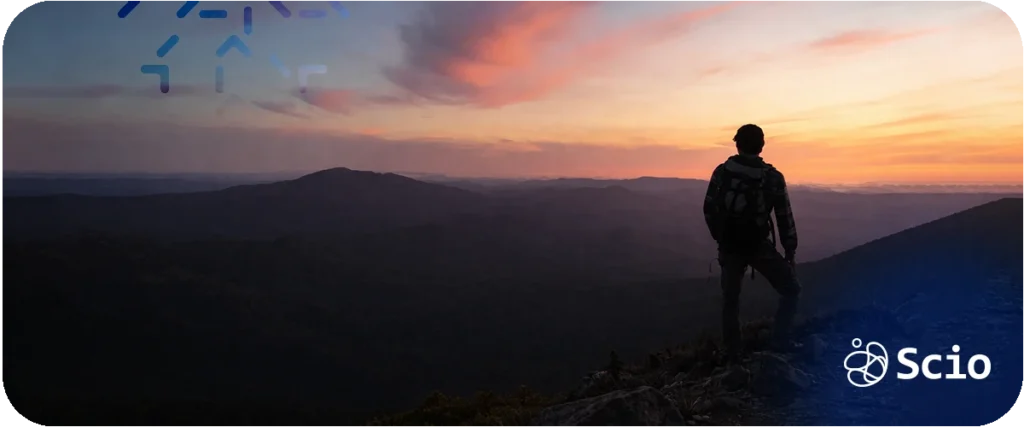
Scrum has earned its place as one of the most reliable frameworks for guiding engineering teams through uncertainty, complexity, and constant change. Yet some of the most meaningful scrum methodology lessons I have learned came far away from planning boards and sprint reviews. They came while climbing mountains.
Mountaineering has a way of stripping things down to the essentials. Every step, every checkpoint, and every decision is a reminder of how progress really works. The parallels with Scrum are not only striking, they are useful, especially for engineering leaders looking to strengthen execution, collaboration, and strategic clarity. Below are the lessons that have proven most valuable, both on the trail and inside product teams.
Table of Contents
The Power of Iterative Progress
Scrum succeeds because it turns large, uncertain projects into small, manageable increments. The approach keeps teams aligned while reducing the emotional pressure that comes from staring at a massive, distant finish line. Mountain climbing operates on the same principle. No climber thinks about the summit while standing at the bottom. The focus is always the next waypoint, the next hour of effort, the next safe stretch of terrain.
For engineering teams, this mindset matters. Breaking work into small, visible chunks helps teams maintain momentum and stay grounded in measurable progress. In both software development and mountaineering, the path rarely unfolds in a straight line. Weather shifts. Priorities change. Terrain surprises you. Having a rhythm of incremental progress makes it possible to adapt without losing sight of the mission. Each checkpoint gives you a chance to evaluate performance, adjust pace, and correct course. That is what makes sprints effective.
Collaboration and Communication at Every Step
Climbing, much like software development, is a team activity. No summit is ever reached without a group that communicates clearly and trusts each other. Daily standups, sprint planning, and backlog discussions exist for a reason. They create space for people to sync, share context, and surface challenges while there is still time to address them.
In mountaineering, that alignment can be the difference between a safe climb and a dangerous one. Climbers talk through weather changes, equipment status, energy levels, and route decisions. They ask direct questions and expect direct answers, because lack of clarity creates unnecessary risk. Engineering leaders often underestimate how much communication influences performance and morale. Teams that talk openly solve problems earlier and move faster. Teams that avoid difficult conversations eventually slow down. The same is true on a mountain.
Adaptation and Risk Management in Real Time

Every climber eventually discovers that even the best plans are temporary. Conditions shift, obstacles appear, and judgment becomes the most valuable tool you have. Scrum teams experience the same truth every sprint. Product requirements evolve. Unexpected bugs surface. Customer priorities change. The ability to adapt quickly is what separates resilient teams from overwhelmed ones.
Risk management in both worlds is not about eliminating risk. It is about anticipating what could go wrong, preparing for it, and responding without losing momentum. Good engineering leaders create environments where changing direction is not seen as a setback but as part of the work. In mountaineering, small adjustments keep the team safe and on track. In software development, continuous adaptation keeps the product relevant and reliable. Both require awareness, humility, and steady decision-making.
Feedback Loops and Continuous Learning
Scrum depends on feedback. Retrospectives, sprint reviews, and user validation provide critical insight into what is working and what is not. Without consistent and honest feedback loops, improvement stalls and teams plateau.
Climbers approach their craft the same way. After a climb, the team reviews what happened, what choices made sense, and what should change before the next attempt. These post-climb evaluations are a form of retrospective discipline. They shape future climbs and strengthen team coordination, safety, and performance. The goal is not to document mistakes but to learn from them. The most successful engineering teams treat feedback as fuel for iteration, not a form of accountability.
Resilience When Things Get Tough
Mountains test resolve in ways few other experiences can. Bad weather, exhaustion, uncertainty, and fear all play a role. Progress is physically and mentally demanding. Software development, while less dramatic, follows a similar pattern. Teams deal with shifting timelines, late discoveries, and technical constraints that push them to their limits.
Resilience is built in small moments, not big ones. It comes from trusting the team, staying focused on immediate goals, and not letting temporary setbacks dictate long-term outcomes. Scrum encourages this mindset through short cycles, clear priorities, and consistent opportunities to reset. Perseverance does not mean ignoring difficulty. It means navigating it with clarity and composure.
Scrum vs. Mountaineering: The Parallels at a Glance
| Area of Practice | Scrum Application | Mountaineering Parallel |
| Progress strategy | Execute work in defined sprints with clear objectives | Advance sequentially from one camp to the next |
| Communication | Daily standups and transparent collaboration | Route discussions and continuous status updates |
| Risk management | Adapt the roadmap as new information arrives | Modify the ascent path with changing conditions |
| Feedback and learning | Retrospectives and user-derived insight | Post-climb evaluations and debriefings |
| Resilience | Sustain a steady pace despite uncertainty | Persevere through demanding physical terrain |
Frequently Asked Questions
What is the main connection between Scrum and mountaineering?
Both rely on incremental progress, collaborative communication, and adaptive decision-making. In both worlds, you move through uncertainty by adjusting your path based on real-time feedback from the environment, whether that is changing weather or changing requirements.
How can engineering leaders apply these lessons to their teams?
By reinforcing feedback loops, encouraging resilience, and breaking large initiatives into manageable, high-visibility goals. This reduces the kind of summit fever that makes teams lose sight of the next achievable step in favor of an overwhelming end goal.
Does iterative progress slow teams down?
No. Much like finding a safe route up a mountain, iteration creates clarity and reduces rework. It allows teams to adapt faster to changing requirements with less friction and less accumulated technical debt than a single, long, unbroken push toward the finish line.
Why do feedback loops matter as much in engineering as they do on a climb?
Because both environments are too dynamic for a single upfront plan to hold. A climbing team that never debriefs repeats the same mistakes on every trip. An engineering team that skips retrospectives repeats the same friction every sprint. The discipline of looking back honestly is what makes the next attempt better than the last.
Every Milestone Is a Chance to Reset
Climbing mountains has taught me that progress is never a straight line. It is a series of deliberate steps, clear conversations, smart adjustments, and steady perseverance. Scrum captures those same principles and applies them to engineering work in a way that feels both practical and enduring.
Engineering leaders who embrace these parallels gain more than a project framework. They gain a deeper understanding of how teams move forward, how people grow, and how challenges shape capability. Whether you are leading a development team or planning your next climb, remember that every milestone offers a moment to learn, reset, and prepare for the next stretch of the journey.
If any of this resonates with how your team approaches execution, I would be glad to talk through it.
References and Further Reading
- Scrum.org, The Scrum Guide. The official, authoritative definition of the Scrum framework, including sprints, retrospectives, and the iterative principles referenced throughout this article. https://www.scrum.org/resources/scrum-guide
- Agile Alliance, Agile Principles and Practices. Research and guidance on Agile team practices, including the feedback loops and adaptive planning that this article connects to mountaineering discipline. https://www.agilealliance.org/
- DORA Research Program, State of DevOps Report. Research on how iterative delivery, feedback culture, and team resilience correlate with high software delivery performance. https://dora.dev/publications/
- Harvard Business Review, Resilience and Team Performance Under Pressure. Research on how teams sustain performance through uncertainty and setbacks, directly relevant to the resilience parallel drawn between climbing and engineering work. https://hbr.org/
- Scio blog, Daily Scrum Best Practices: 5 Ways to Energize Teams. Practical guidance on running effective daily Scrums, complementing the iterative progress and communication principles in this article. https://sciodev.com/blog/daily-scrum-best-practices/
- Scio blog, Feedforward in Engineering Teams: 5 Proven Approaches. How forward-looking feedback practices build on the retrospective discipline this article describes through the lens of post-climb evaluation. https://sciodev.com/blog/feedforward-engineering-teams/