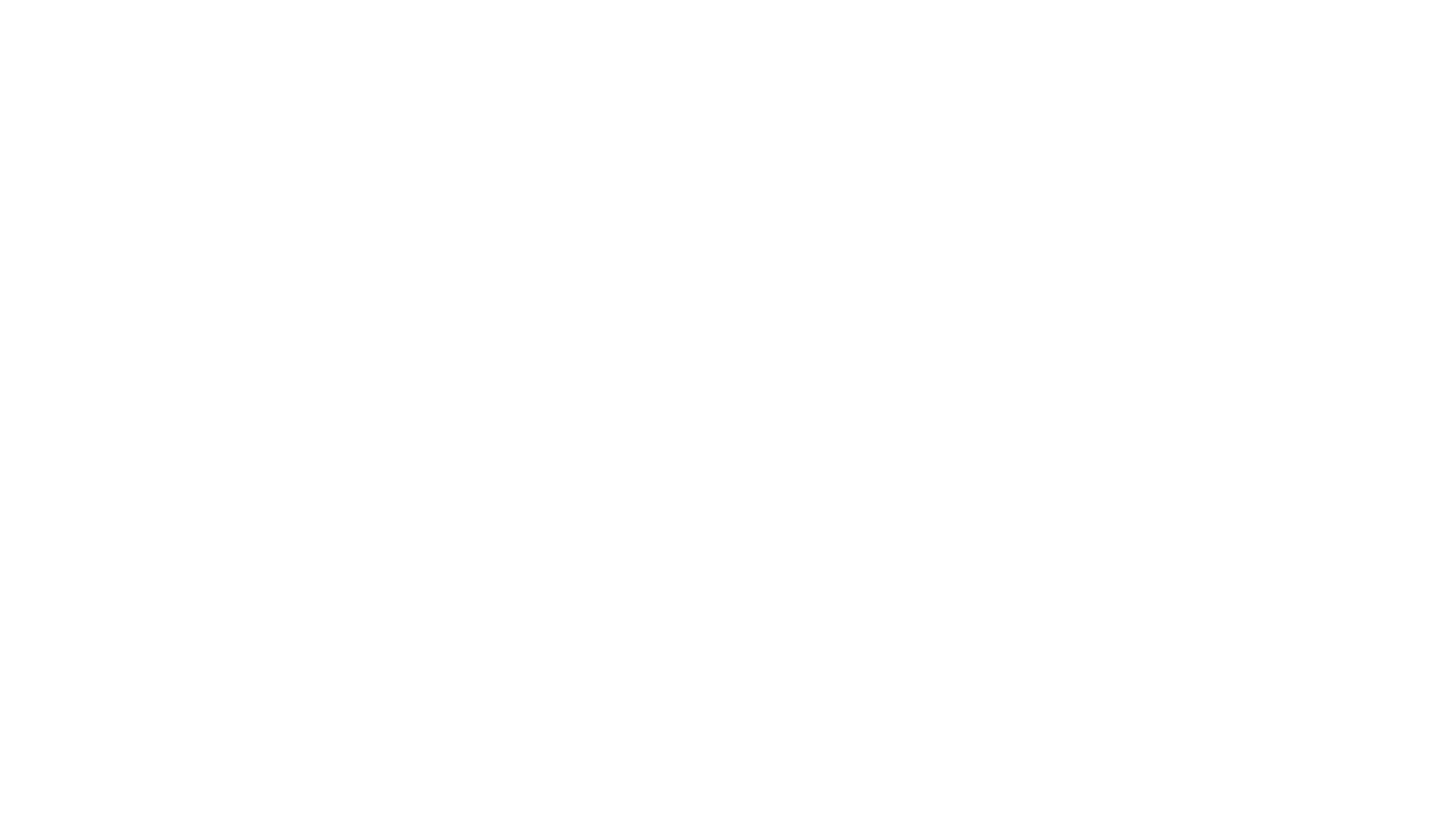
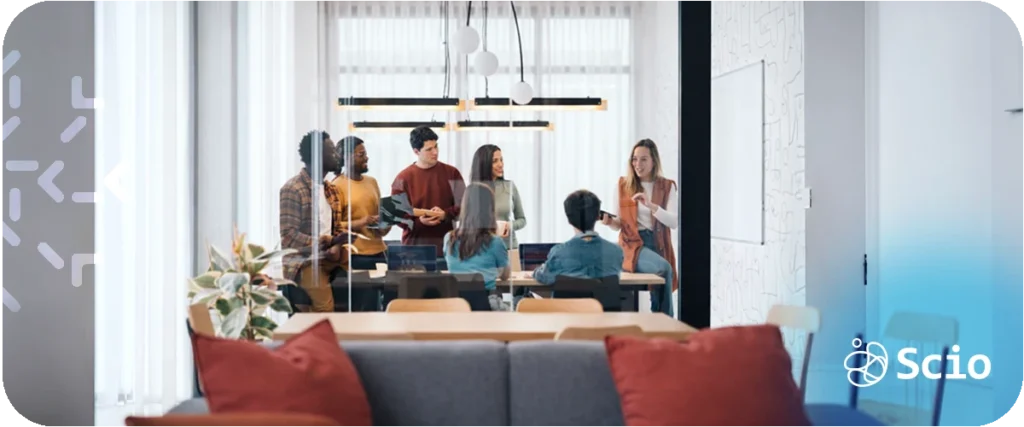
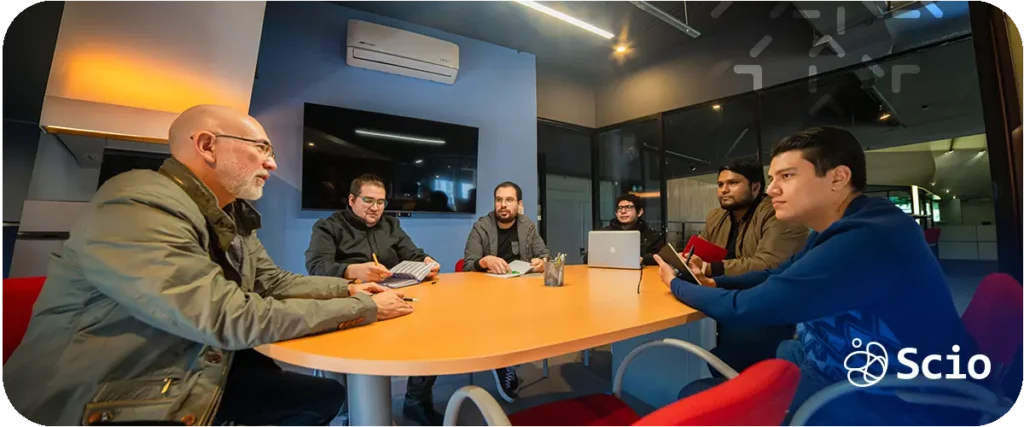
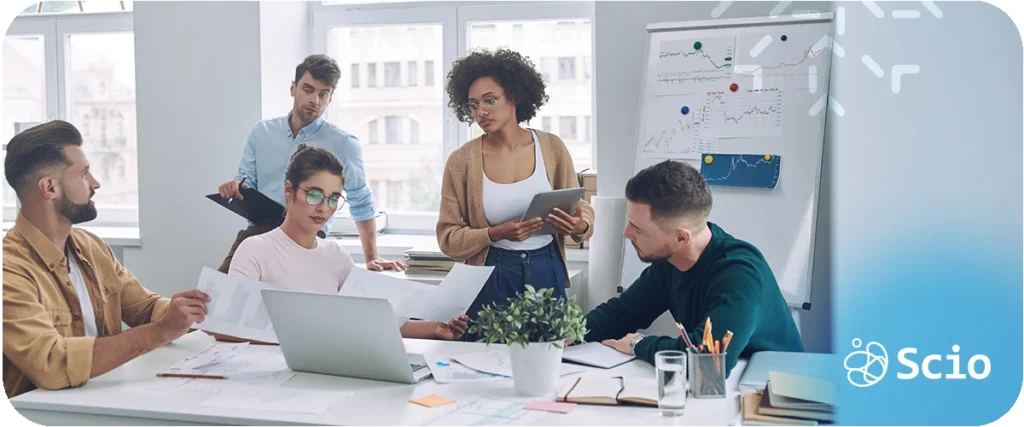
Over the past decade, engineering teams across the US have shifted their expectations of what a healthy workplace looks like. What once revolved around rigid structures and top-down direction now emphasizes transparency, shared ownership, and a culture where people can bring both their technical skills and human strengths to the table.
For CTOs and engineering leaders, this shift is not theoretical. It affects hiring pipelines, retention, delivery predictability, and the performance of nearshore partners supporting product teams. Developers today want more than a list of sprint tasks. They want meaningful collaboration, consistent communication, and an engineering team culture that helps them grow.
TABLE OF CONTENTS
The Evolution of the Modern Developer
A decade ago, most engineering teams favored senior developers who could operate with minimal guidance, navigate legacy systems, and bring predictable stability to long-term roadmaps. That workforce shaped not only technical expectations but also the cultural rhythm of engineering organizations.
"Back in 2007, early in Scio's history, we primarily hired senior developers because the work required it. Our teams were heavily focused on .NET projects, and we needed people with years of experience. Most engineers were 30+, many starting families, and their priorities revolved around stability and long-term career paths." — Helena Matamoros, Head of Human Capital, Scio
Today's developer landscape looks completely different. The explosion of frameworks, cloud platforms, open-source tooling, and cross-disciplinary workflows has opened the door for a much wider range of profiles. Junior and mid-level developers arrive with strong technical foundations, exposure to collaborative tools, and a mindset shaped by community-driven learning.
Another important evolution is social. Helena highlights that today's developers break the old introverted-engineer stereotype. They value connection, cross-team learning, and real collaboration. Openness to collaborate is far more common than it was a decade ago. People want to connect, share, and be part of something bigger than their tasks. This mindset is critical because collaboration is not a buzzword at Scio. It is a competency. It is part of hiring. It is part of onboarding. It is the first filter applied to anyone joining the organization.
How Engineering Team Culture Shapes Collaboration Across Borders
Intentional culture design creates clarity, alignment, and stronger engineering outcomes.
For engineering leaders in the US, one of the biggest questions when evaluating a nearshore partner is cultural alignment. Skill matters. Experience matters. But the day-to-day collaboration between distributed teams determines whether a partnership succeeds.
"We're a nearshore company with talent across Mexico and Latin America. Some Scioneers visit the office often, but many work fully remote. Our challenge is making sure no one feels like they're working alone. People want to know that what they do matters. They want to feel part of a whole." — Helena Matamoros, Head of Human Capital, Scio
A strong collaborative culture does not mean constant consensus. It means shared clarity. It means knowing who to ask for help. It means understanding how one person's work supports the goals of the team. In remote or hybrid engineering environments, this level of alignment requires deliberate effort.
5 Proven Collaboration Wins from Scio's Approach
1. Regular cross-team syncs and transparent project communication
Isolation is the enemy of distributed team performance. Regular cross-team syncs, transparent communication about project status and priorities, and shared visibility into architectural decisions create the conditions where engineers can make better local decisions without needing to escalate constantly. When the broader context is available, autonomy becomes productive rather than risky.
2. Mentorship and shared code reviews
Mentorship and peer code review are not just quality mechanisms. They are culture mechanisms. When engineers regularly review each other's code in a constructive, learning-oriented environment, they build the interpersonal familiarity and shared technical language that makes collaboration at speed possible. At Scio, this is embedded into the standard engineering process, not offered as an optional program.
3. Cultural initiatives that create shared identity
For distributed teams, a shared identity does not emerge from proximity. It must be deliberately designed through programs that connect engineers to each other and to the mission of the organization. This matters for nearshore partnerships specifically because engineers who feel connected to Scio's culture and their client's culture simultaneously deliver work that reflects both. They are not caught between two organizational identities. They inhabit both comfortably.
4. Programs that celebrate learning and continuous improvement
Scio Elevate Mentorship and internal learning programs create structured pathways for engineers to grow alongside their client engagements. When developers see a clear growth trajectory within a stable partnership, retention improves. And when retention is high, the institutional knowledge that makes senior-level delivery possible accumulates rather than resetting with every departure.
5. Team building that builds trust across time zones
Trust in distributed teams does not develop passively. It requires intentional investment in the human relationships behind the technical work. Team-building that connects engineers personally, not just professionally, creates the psychological safety that makes honest technical conversations possible. This is where engineering team culture most directly affects delivery: when engineers trust each other enough to surface risks early, propose alternatives, and take ownership of outcomes rather than just tasks.
Collaborative vs. Non-Collaborative Teams: A Direct Comparison
Area
Collaborative Team
Non-Collaborative Team
Communication
Clear, frequent, and proactive
Inconsistent and reactive
Knowledge Sharing
Structured peer reviews and mentorship
Silos and limited visibility
Delivery Predictability
Stable, low-friction workflows
Frequent surprises and delays
Team Morale
High engagement and shared ownership
Low trust and disengagement
Onboarding
Accelerated through shared norms and culture
Slow and fragmented, dependent on individuals
How Scio Builds a Culture Where Everyone Matters
The foundation of Scio's engineering team culture is intentional design. Every program, from hiring to mentorship, is built around the idea that people do better work when they feel seen, supported, and part of a community.
Helena highlights that Scio invests heavily in helping developers understand how their contributions connect to real product outcomes. This alignment creates meaning, reduces ambiguity, and strengthens a developer's sense of purpose. Engineers are not just delivering tasks. They are contributing to a shared goal with the client.
Creating a place where everyone matters requires clear expectations, consistent communication, fair opportunities for growth, recognition that values consistency over competition, mentorship that helps developers level up, and development plans that support long-term careers. Many nearshore or offshore vendors prioritize throughput. Scio prioritizes people. This is not altruistic. It is operational strategy. High-performing teams emerge when people feel supported, trusted, and connected.
"Collaboration is at the heart of everything we do. It isn't something we add on top. It's the way we hire, the way we build teams, and the way we support our clients." — Helena Matamoros, Head of Human Capital, Scio
What This Means for US Engineering Leaders
A nearshore engineering partner is not just an extension of headcount. It is an extension of culture. For US engineering leaders, the success of a nearshore team depends on how well that team understands your expectations, communicates proactively, and integrates into your workflow.
Mid-market software companies
For mid-market software companies where the engineering team's culture directly affects delivery velocity and retention, a nearshore partner's internal culture is a strategic variable, not a background detail. Partners who invest in their own engineering culture produce engineers who are better equipped to integrate into yours. The internal practices of a nearshore firm are a reliable predictor of how their engineers will behave inside your product organization.
A dedicated nearshore engineering team from a partner with a strong collaborative culture reduces the management overhead typically required to sustain quality and cohesion in distributed arrangements.
PE-backed software portfolios
For PE-backed organizations, engineering team culture risk compounds across the portfolio. Each PortCo working with a nearshore partner whose culture is misaligned with their product organization carries predictable collaboration friction, higher management burden, and increased attrition risk. Evaluating partner culture as a primary selection criterion rather than a secondary one reduces this risk systematically.
If you are evaluating nearshore partners and want to understand how culture specifically affects delivery reliability, our team at Scio is happy to share how we approach it.
Frequently Asked Questions
Why is collaboration essential in nearshore engineering teams?
Collaboration improves delivery predictability, strengthens communication, reduces friction, and helps distributed teams align closely with US product expectations and decision-making rhythms. Teams that have strong collaborative norms resolve blockers faster, surface risks earlier, and deliver more consistently because they are not constantly compensating for communication gaps or unclear ownership.
How does Scio maintain engineering team culture across remote and hybrid environments?
Through intentional communication practices, structured mentorship, ongoing training, and cultural programs designed to build a shared identity across teams and locations. The key is that culture at Scio is not treated as an office-dependent phenomenon. It is designed to function at a distance, with explicit rituals, structured growth programs, and leadership practices that create belonging regardless of physical location.
What makes Scio's engineering teams easier to work with than typical nearshore vendors?
A culture built on clarity, shared expectations, continuous learning, and genuine collaboration allows developers to integrate smoothly into US engineering workflows as true team members rather than external contractors. Engineers who feel valued and connected to a shared mission communicate more proactively, handle feedback more constructively, and take greater ownership of outcomes than those who feel like temporary placements.
How does Scio support developer growth through Scio Elevate?
Through mentorship, workshops, technical training, and individualized development plans that support long-term career growth within stable client partnerships. Scio Elevate connects engineers with experienced mentors who help them develop both technical depth and the communication and collaboration skills that senior-level performance requires. The program is designed to compound over time, building the institutional capability that makes long-term nearshore partnerships more valuable than transactional ones.
How does a strong engineering team culture reduce attrition in nearshore partnerships?
Engineers stay in environments where they feel supported, valued, and connected to a shared mission. A strong collaborative culture provides meaningful growth opportunities, genuine peer connection, and a sense that individual contributions matter to the broader product outcome. When engineers experience this in a nearshore environment, they are significantly more likely to remain with client engagements long enough to develop the institutional knowledge and product familiarity that makes senior-level delivery possible.
Culture Is the Foundation, Not the Bonus
For engineering leaders evaluating nearshore partners, the cultural backbone of a partner organization is often what separates successful long-term partnerships from transactional staffing relationships. A strong engineering team culture compounds. It reduces risk. It improves predictability. It elevates product quality. And it creates a partnership that grows with you.
When engineers feel seen and aligned, collaboration becomes a competitive advantage. That is the difference between hiring individuals and partnering with a unified team.
If you want to understand how Scio's culture translates into delivery reliability for your specific engineering context, our team is happy to show you.
References and Further Reading
Harvard Business Review, Engineering Culture and Team Performance — Research on how organizational culture, psychological safety, and shared norms affect engineering team productivity and long-term delivery quality. hbr.org
Gallup, "State of the Global Workplace Report" — Annual data on employee engagement, team belonging, and the organizational conditions that produce high-performing distributed engineering teams. gallup.com
DORA (DevOps Research and Assessment), "State of DevOps Report" — Research confirming that generative culture, psychological safety, and collaborative working norms are among the strongest predictors of high software delivery performance. dora.dev
Google re:Work, Team Effectiveness and Culture Research — Research identifying psychological safety, dependability, structure and clarity, meaning, and impact as the five key factors in high-performing team culture. rework.withgoogle.com
SHRM, Workplace Culture and Retention Research — Data on how organizational culture, growth opportunities, and team belonging affect retention and long-term performance in engineering organizations. shrm.org
MIT Sloan Management Review, Nearshore Team Alignment and Culture — Research on how cultural alignment in distributed engineering teams affects delivery predictability and long-term organizational performance. sloanreview.mit.edu
Scio blog, "Distributed Team Connection: 5 Proven Strategies That Work" — How intentional culture design reduces ghost colleague dynamics and builds genuine professional connection in distributed and nearshore engineering teams. sciodev.com
Scio blog, "Emotional Intelligence in Software Engineering: 5 Real Wins" — How emotional intelligence and interpersonal awareness shape engineering team culture and the quality of collaboration in distributed environments. sciodev.com
Software development has always attracted people who enjoy learning, experimenting, and staying curious. It is a field shaped by constant change, where new frameworks appear, architectures evolve, and engineering practices refine themselves every year. For developers, choosing where they work is not only about finding a job. It is about choosing a place that fuels their curiosity, supports their growth, and gives them room to explore new paths.
At Scio, this idea has guided nearly a decade of building a culture that supports long-term growth. Learning is not an extracurricular activity. It is part of the way teams operate, collaborate, and deliver value. This article explores how Scio approaches learning as a core part of engineering culture, why programs like Sensei-Creati exist, and what five measurable culture wins an intentional engineering mentorship program consistently produces.
TABLE OF CONTENTS
Learning as a Foundation for High-Performing Engineering
A strong engineering culture begins with curiosity. Developers who enjoy learning tend to ask better questions, experiment with new approaches, and stay engaged with their work. This mindset becomes even more important in an industry where the pace of evolution never slows. For many engineers, the first years after school reveal something important: academic training introduces concepts, but real-world software development requires a much broader set of skills.
Modern teams expect familiarity with agile practices, continuous integration, automated testing, cloud-native architectures, and cross-functional collaboration. Closing those gaps requires practical experience, mentorship, and access to peers who can guide growth. This was the experience of Carlos Estrada, a Lead Application Developer at Scio who first joined as an intern. At the time, concepts like SCRUM, unit testing, and structured code reviews were new. Rather than facing those challenges alone, he learned them through collaboration, project immersion, and day-to-day problem-solving with his team.
This learning culture connects every part of the organization. Developers share knowledge with developers. Teams learn from other teams. Partners receive the benefit of engineering groups who stay current, challenge assumptions, and continually refine their craft.
Sensei-Creati: Scio's Model for Collaborative Learning
To support long-term development, Scio designed a program called Sensei-Creati, a hybrid model of mentoring and coaching built around voluntary participation. Unlike traditional performance-driven mentoring, this engineering mentorship program focuses on curiosity, autonomy, and personalized growth.
A Creati is any collaborator who wants to develop a skill, improve a technical competency, or explore a new area of engineering or soft skills.
A Sensei is a more experienced peer who has walked that road before and is willing to share feedback, experience, and perspective.
When a Creati approaches a Sensei, the two begin a development process that is collaborative, flexible, and centered on the Creati's goals rather than organizational requirements.
The program is open to everyone regardless of seniority. A developer in IT who wants to learn QA can find a Sensei with QA experience. A senior engineer who wants to improve communication or leadership skills can work with someone skilled in those areas. The structure encourages movement across technical and non-technical domains.
"The intent is to create a culture where growth is fueled by collaboration rather than hierarchy. Strengths are identified, encouraged, and used to overcome challenges. Conversations are guided without judgment. The process supports both technical advancement and personal development." — Yamila Solari, Co-Founder and Coaching Leader, Scio
When Sensei-Creati began nearly ten years ago, it was tied to supervision and performance evaluation. Over time, Scio realized that real learning does not happen through obligation. It happens when someone is genuinely open to it. The program shifted to a voluntary model, which proved far more effective. Engineers choose the skills they want to explore, the pace they prefer, and the direction of their development. That shift transformed the program from a compliance activity into a foundational part of Scio's engineering culture.
Teaching as a Path to Mastery
For developers like Carlos, learning eventually evolved into teaching. As someone who has spent more than a decade at Scio, he experienced the entire cycle: arriving with gaps, learning through real-world projects and collaboration, and eventually joining the company's Coaching Committee. In that committee, senior staff help guide activities including assessing developer performance for promotions, designing technical tests for new candidates, shaping workshops for advancing engineers, and refining the Sensei-Creati curriculum to include new technologies and tools.
Teaching, as many experienced developers know, directly strengthens one's own skills. Explaining a concept requires clarity. Demonstrating a technique requires mastery. Reviewing someone else's code exposes patterns and anti-patterns that improve your own thinking. This leads to a mentoring network inside Scio where senior developers guide apprentices, mid-level engineers teach emerging juniors, and staff across disciplines exchange knowledge constantly. The result is a more resilient engineering team that can respond to rapid industry changes with confidence and shared skill.
5 Proven Culture Wins from Scio's Engineering Mentorship Program
1. Faster closure of practical skill gaps
The gap between academic training and production software development is consistently real. An engineering mentorship program that pairs developers with experienced peers closes that gap in months rather than years. Engineers learn agile practices, testing disciplines, code review standards, and architectural thinking by working alongside people who apply them daily, not by studying them abstractly.
2. Stronger retention through genuine investment
Engineers stay longer when they see a growth path that does not depend solely on personal time and individual initiative. Programs like Sensei-Creati demonstrate a commitment to personal development that goes beyond traditional corporate training. They offer engineers agency over their growth direction, which is especially important for high performers who have options.
3. Knowledge resilience across the team
When mentorship is embedded in the engineering culture, knowledge distributes more naturally across the team. Senior engineers who mentor regularly prevent expertise from pooling in individual contributors who become single points of failure. This directly raises the Bus Factor and reduces the delivery disruption that follows key departures.
4. Cross-disciplinary capability that strengthens delivery
An engineering mentorship program that actively encourages movement across technical and non-technical domains produces engineers who understand more of the delivery system than their own role. A backend engineer who has spent time learning QA practices writes more testable code. A developer who has explored leadership skills communicates more effectively during high-stakes architectural decisions.
5. A learning culture that clients can feel
When a Scio engineer joins a client team, they enter that engagement with a culture where curiosity, knowledge sharing, and collaborative growth are already established norms. This reduces the ramp-up period, improves the quality of the technical contributions from the first sprint, and creates the kind of team environment where both Scio engineers and client engineers raise each other's performance over time. For more on how Scio's internal culture translates into client delivery outcomes, see Engineering Team Culture: 5 Proven Collaboration Wins.
Traditional Career Development vs. Scio's Learning Culture
Aspect
Traditional Model
Scio's Approach
Participation
Mandatory, top-down
Voluntary, peer-driven
Focus
Performance gaps and compliance
Personal and technical goals chosen by the engineer
Mentorship
Assigned by management
Chosen by the engineer based on goals
Pathways
Linear, role-bound
Flexible and cross-disciplinary
Motivation
Compliance and performance review
Curiosity and autonomy
What This Means for Engineering Leaders
Engineering leaders evaluating nearshore partners
For engineering leaders evaluating nearshore partners, the internal learning culture of a partner organization is one of the most predictive indicators of long-term engineering quality. Partners who invest in structured engineering mentorship programs produce engineers who continue developing alongside client engagements rather than plateauing at initial competency levels. The quality of what a nearshore partner delivers in year three of an engagement is directly shaped by whether their internal culture supported growth during years one and two.
A dedicated nearshore engineering team from a partner with a strong learning culture brings a compounding advantage that partners without structured programs cannot replicate.
Engineering leaders building internal programs
For engineering leaders designing or improving internal mentorship programs, the Sensei-Creati model illustrates a principle that consistently proves effective: voluntary participation produces better outcomes than mandatory compliance. When engineers choose their growth direction and their mentors, the quality of the engagement and the sustainability of the learning are both significantly higher. Starting with a small voluntary program and allowing it to expand organically as its value becomes visible produces stronger long-term results than imposing a formal structure before trust is established.
If your organization is working through how to build an engineering mentorship program that actually changes culture, our team at Scio is happy to share what we have learned over a decade of running Sensei-Creati.
Frequently Asked Questions
Is Sensei-Creati only for junior developers?
No. The program is inclusive and open to every collaborator at Scio regardless of seniority level, role, or technical discipline. Growth is a continuous journey for everyone, including senior engineers who want to develop leadership skills, communication capabilities, or expertise in adjacent technical domains. The voluntary structure means that participation reflects genuine interest rather than developmental stage.
Do Senseis need formal certification to participate?
Every new Sensei completes a short internal coaching course before guiding others. This ensures that each Sensei has the communication skills and coaching methodology to provide effective guidance rather than simply sharing their own experience without a framework. The focus is on active listening, asking questions that help the Creati develop their own clarity, and supporting growth without creating dependency.
Can developers switch tracks through Sensei-Creati, such as moving from software development to QA?
Yes. The program actively encourages exploring new career paths and expanding skill sets. Engineers have used Sensei-Creati to explore QA, SRE, DevOps, product thinking, architecture, and team leadership. The cross-functional knowledge that results makes the engineering teams stronger overall, since developers who understand more of the delivery system make better decisions within their primary role.
Is participation in Sensei-Creati tied to performance reviews?
No. Participation is entirely voluntary and exists independently of formal supervisory evaluations or annual performance reviews. This is intentional. Learning that is tied to performance evaluation creates a different incentive structure that often produces compliance rather than genuine growth. The separation between Sensei-Creati and performance management is what makes the program a space dedicated purely to personal and professional development.
How does an engineering mentorship program affect client delivery quality?
Directly and measurably. Engineers who participate in structured mentorship programs develop more quickly, retain institutional knowledge more effectively, and communicate more clearly with client teams. The learning culture established through programs like Sensei-Creati creates engineers who approach client problems with curiosity and collaborative instincts rather than pure task execution. Over a multi-year engagement, the compounding effect of continuous development produces engineers who are significantly more valuable to client organizations than those who have not had access to structured growth support.
A Framework for Long-Term Engineering Growth
Building an engineering culture around learning does more than improve individual capabilities. It creates predictable benefits for teams and clients: developers who continually refine their skills bring modern practices into every project, teams communicate more effectively because they are used to open dialogue and constructive feedback, and the organization becomes better at adapting to new challenges because learning is already a habit baked into how people work.
Engineers stay longer when they feel supported, valued, and encouraged to grow. Programs like Sensei-Creati demonstrate a commitment to personal development that goes beyond traditional corporate training. They offer engineers agency, which is especially important for high performers.
If your organization is evaluating nearshore partners and wants to understand how engineering mentorship program quality translates into delivery reliability, our team at Scio is happy to show you what a decade of investment in this kind of culture looks like in practice.
Harvard Business Review, Mentorship and Engineering Performance Research — Research on how structured mentorship programs affect skill development, retention, and long-term engineering team performance. hbr.org
SHRM, Employee Development and Retention Research — Data on how investment in professional development, mentorship access, and career growth opportunities affect retention rates in knowledge-work organizations. shrm.org
Google re:Work, Learning Culture and Team Performance — Research on how continuous learning, psychological safety, and collaborative knowledge sharing affect engineering team effectiveness and long-term performance. rework.withgoogle.com
DORA (DevOps Research and Assessment), State of DevOps Report — Research on how continuous learning culture, knowledge sharing practices, and team development investment correlate with high software delivery performance. dora.dev
MIT Sloan Management Review, Learning Organization Research — Research on how organizations that systematize learning and knowledge sharing build more resilient and adaptable engineering capabilities over time. sloanreview.mit.edu
Gallup, Employee Development and Engagement Research — Data on how investment in growth opportunities affects employee engagement, retention, and the quality of discretionary effort that high-performing engineers contribute. gallup.com
Scio blog, Engineering Team Culture: 5 Proven Collaboration Wins — How Scio's internal culture of collaboration and continuous learning translates into the client delivery quality that long-term nearshore partnerships produce. sciodev.com
Scio blog, Junior vs Senior Developer: 5 Real Behaviors That Win — How structured mentorship and intentional growth programs accelerate the behavioral development that distinguishes senior-level from junior-level engineering performance. sciodev.com
In today's technology environment, long hours in front of a screen are part of the job. Developers move between deep focus, problem-solving, meetings, and asynchronous collaboration across time zones. Over time, this constant mental load can affect both physical and emotional wellbeing, especially when there is little space to disconnect.
At Scio, software developer wellbeing is not a side program or a benefit checkbox. It is part of who we are. Supporting people intentionally, inside and outside of work, shapes how our collaborators experience their daily lives, how they connect with each other, and how they show up for the work that matters.
TABLE OF CONTENTS
Mental Fitness as Part of Overall Wellbeing
Software development is mentally demanding. Developers navigate complexity, ambiguity, and constant change. Without proper balance, this can lead to mental fatigue, emotional exhaustion, and disconnection, not only from work, but from personal life as well.
At Scio, we approach mental fitness first and foremost as a health topic. Physical activity supports emotional regulation, mental clarity, and stress management, helping people feel better in their daily lives. When collaborators feel healthier and more balanced, positive outcomes follow. But those outcomes are a result, not the goal. The goal is simply to support people as people.
Movement as Space for Recovery and Balance
Encouraging movement is not about routines, metrics, or expectations. It is about creating space. Physical activity gives people a chance to step away from the screen, reconnect with their bodies, and clear their minds. For many, it becomes a moment to breathe, reset, and create healthier boundaries between work, personal time, and social life.
From a people and culture perspective, this is about prevention and care. Supporting movement helps reduce burnout risk and promotes more sustainable rhythms, where work fits into life rather than the other way around. That philosophy shapes every wellbeing initiative at Scio.
Scio Active: Moving Together, Wherever We Are
Scio Active is one of our core wellbeing initiatives and a reflection of this people-first mindset. Twice a year, we run Scio Active as a 12-week challenge open to all Scio collaborators, regardless of role, location, or fitness level. Each participant defines a personal goal that fits their own life and circumstances. Walking, running, yoga, cycling, gym workouts, any form of movement is valid.
What matters is not intensity or performance. It is participation. By sharing the same challenge timeline, collaborators across different countries and cities become part of a shared experience. This creates distributed team connection through movement, helping people feel included and connected even in remote and nearshore environments where physical proximity is not possible.
Team Sports: Connection Beyond Work
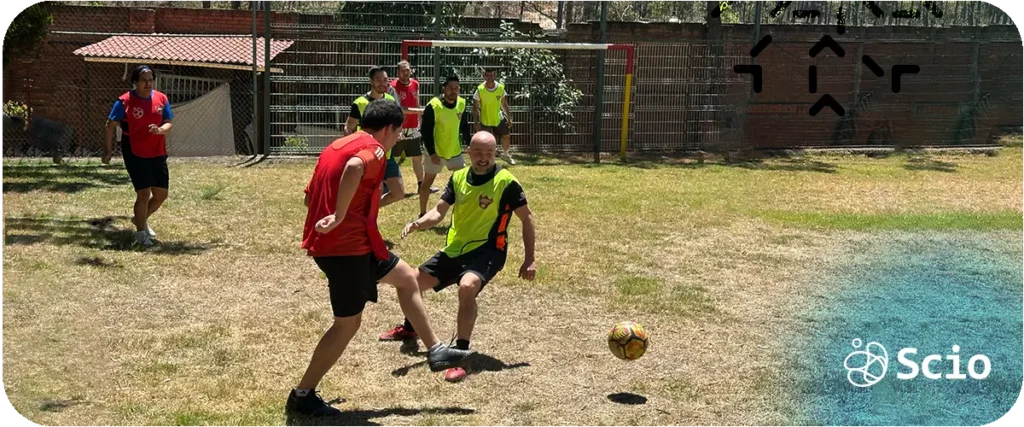
In addition to individual initiatives, Scio supports weekly football and padel activities. These spaces are intentionally informal and human. They are not about competition or results, but about:
Spending time together outside of work
Building genuine relationships that extend beyond job titles
Encouraging teamwork, support, and camaraderie
Creating a sense of belonging that carries into daily collaboration
Team sports help people connect beyond their roles and responsibilities. The conversations, the shared effort, and the informal moments build the relational trust that makes professional collaboration easier and more honest. For a distributed organization, these touchpoints are particularly valuable.
Wellbeing as Foundation for a Healthy Work Culture
Physical activity also supports mental wellbeing by offering a healthy way to disconnect from work pressures. Moving the body, socializing, and sharing moments with teammates help reduce stress and support emotional balance. By focusing on health, mental wellbeing, and social connection, Scio aims to improve quality of life first. When people feel better in their lives, feeling better at work becomes a natural outcome, not something forced or measured.
This philosophy also reduces burnout risk at the organizational level. Burnout in engineering teams is not primarily caused by hard work. It is caused by sustained mental overload without recovery space, unclear boundaries between work and personal time, and a lack of genuine human connection. Wellbeing programs that address all three dimensions, physical activity, personal balance, and team connection, address the root causes rather than the symptoms.
Cultural Alignment in Nearshore Software Teams
At Scio, wellbeing initiatives are not isolated programs. They are part of our culture. Whether someone works onsite, remotely, or as part of a nearshore team, they experience the same commitment to care, balance, and human connection. This consistency strengthens cultural alignment across distributed teams, ensuring that everyone feels supported and included regardless of location.
For engineering leaders evaluating nearshore partners, culture and wellbeing practices are a reliable signal of how a company treats its people. Organizations that invest in developer wellbeing produce lower attrition, stronger team cohesion, and more consistent delivery quality. The connection between individual wellbeing and organizational delivery performance is not abstract. It shows up in retention rates, in the quality of collaboration, and in the institutional knowledge that stays with the team over time.
What This Means for Engineering Leaders
Mid-market software companies
For mid-market software companies evaluating nearshore partners, the wellbeing culture of a partner organization directly affects the attrition risk, team stability, and collaboration quality of the engineering teams you depend on. High-turnover engineering environments create the knowledge loss and delivery disruption that cost more than the apparent savings. Partners that invest in their people retain the engineers who understand your product, your architecture, and your team's communication norms.
A nearshore dedicated engineering team from an organization with strong wellbeing culture produces measurably better retention and more consistent long-term performance.
PE-backed software portfolios
For PE-backed software portfolios engineering team health aggregates across the portfolio. PortCos with high engineering attrition carry hidden execution risk that affects delivery predictability and increases the cost of every knowledge transfer. Nearshore partners with demonstrated wellbeing culture reduce this risk by building the retention and team stability that protects institutional knowledge.
If you want to understand how Scio's culture and wellbeing practices translate into delivery reliability for your engineering organization, our team would be glad to share more.
Frequently Asked Questions
Why does physical activity matter for software developer wellbeing?
Because software development imposes sustained mental load that accumulates over time. Physical activity provides a genuine recovery pathway, helping developers regulate stress, restore mental clarity, and maintain the emotional balance that complex problem-solving requires. Organizations that support physical activity as part of wellbeing culture see lower burnout rates, better retention, and more sustained team performance than those that treat wellbeing as a personal responsibility.
How does Scio Active work and who can participate?
Scio Active is a 12-week challenge run twice a year and open to all Scio collaborators regardless of role, location, or fitness level. Each participant defines a personal goal that fits their own life: walking, running, yoga, cycling, gym, or any other form of movement. The shared challenge timeline creates a collective experience that connects collaborators across different countries and cities, reinforcing team belonging across distributed environments.
How does developer wellbeing culture affect nearshore engineering team performance?
By reducing attrition, strengthening team cohesion, and maintaining the institutional knowledge that distributed teams depend on. When engineers feel genuinely supported as people, they stay longer, collaborate more openly, and contribute more consistently to the product and architecture knowledge that makes delivery reliable. For engineering leaders, partnering with an organization that invests in wellbeing culture reduces the retention and knowledge-continuity risks that undermine long-term delivery.
How does Scio build team connection across distributed and remote environments?
Through a combination of shared rituals, regular collaboration practices, and wellbeing programs that create touchpoints across distance. Scio Active creates a shared experience across time zones. Weekly team sports create informal relationship-building moments for local teams. Daily collaboration rituals, standups, retrospectives, and informal check-ins, reinforce the human connection that makes distributed work feel genuinely collaborative rather than transactional.
Is wellbeing culture a meaningful signal when evaluating nearshore engineering partners?
Yes. Organizations that invest in wellbeing produce lower attrition and higher team stability, which directly affects the reliability and knowledge continuity of the engineering teams you depend on. High-turnover environments create delivery disruption, knowledge loss, and the overhead of constant onboarding. Evaluating a partner's wellbeing culture is a practical proxy for the retention and stability characteristics that determine long-term engagement quality.
Wellbeing Is Not a Feature. It Is a Foundation.
Great software is built by people who feel healthy, balanced, and connected. That belief is not aspirational at Scio. It is operational. By fostering physical activity, genuine human connection, and a culture of care, we support our collaborators as people first. That care reflects in the work they do, the teams they build, and the partnerships they sustain.
For technology leaders evaluating nearshore partners, software developer wellbeing culture is worth examining as a practical indicator of retention, team stability, and the kind of long-term partnership that compounds value over time rather than eroding it.
If you want to learn more about how Scio's culture translates into engineering team reliability, our team would be glad to talk.
Isleen Hernández
Human Capital Administrator
References and Further Reading
American Psychological Association, Physical Activity and Mental Health Research. Research on how regular physical activity affects stress regulation, emotional resilience, and cognitive performance in knowledge-work environments. https://www.apa.org/
Harvard Business Review, Burnout and Organizational Culture Research. Analysis of how organizational culture practices, including wellbeing investment, affect burnout rates, retention, and knowledge-work performance over time. https://hbr.org/
Gallup, Employee Wellbeing and Engagement Research. Annual research on how wellbeing culture affects engagement, retention, and the discretionary effort that distinguishes high-performing engineering teams from average ones. https://www.gallup.com/
DORA (DevOps Research and Assessment), State of DevOps Report. Research showing that culture, psychological safety, and team belonging are among the strongest predictors of high software delivery performance, directly connecting wellbeing investment to delivery outcomes. https://dora.dev/publications/
MIT Sloan Management Review, Team Culture and Distributed Work Research. Analysis of how belonging-building practices, shared rituals, and wellbeing investment affect distributed team cohesion and sustained performance over time. https://sloanreview.mit.edu/
Scio blog, Emotional Intelligence in Software Engineering: 5 Real Patterns. How emotional regulation, stress management, and interpersonal awareness in engineering teams connect to the wellbeing culture that supports them. https://sciodev.com/blog/emotional-intelligence-software-engineering/
Scio blog, Distributed Team Connection: 5 Proven Ways to Build Trust Across Screens. How distributed engineering teams build the human connection that wellbeing initiatives reinforce and that performance depends on over time. https://sciodev.com/blog/distributed-team-connection/
Career growth in software development no longer resembles a single ladder with predictable steps. For many engineers, the question is no longer "What is the next title?" but "What shape do I want my career to take?" The industry has shifted toward adaptability, breadth of skill, and multidimensional development. For engineering leaders, this shift is a reminder that talent grows best in environments built for experimentation, learning, and genuine human connection.
Today's junior engineer can become a product strategist. A mid-career QA analyst can transition into security. A senior developer can move into coaching, architecture, or a new technical domain without leaving the field. Rather than a single direction, career growth in software development now expands outward, creating space for curiosity and autonomy.
TABLE OF CONTENTS
Understanding the Peter Principle in Engineering
The conversation about modern career paths begins with an honest look at why traditional structures often fail. The Peter Principle, introduced by educator Laurence J. Peter, describes a persistent pattern: when people are promoted solely based on success in their current role, they eventually reach a position where they are no longer competent.
Software development has long suffered from this dynamic. A top-performing individual contributor was often promoted into management because upward movement was the only visible path. Talented developers became engineering managers even when leadership, coaching, or strategic planning were not part of their core strengths. Engineering leaders have experienced the consequences directly: team leads who do not enjoy leading, managers who miss coding, senior roles held by people who would thrive if allowed to explore different branches of the craft.
The Peter Principle persists when organizations limit growth to a ladder instead of a lattice. The issue is not the individual but the structure around them. When promotion becomes the only recognized form of advancement, companies lose the opportunity to nurture talent in more nuanced ways, and risk placing people in roles where their strengths are underutilized.
The New Shape of Software Careers
The modern workplace is moving away from linear growth. Software development rewards people who explore diverse skills, because the needs of engineering teams evolve as quickly as the technologies they use. A developer today might contribute to QA, DevOps, product discovery, or data engineering tomorrow. This fluidity improves adaptability and widens the impact of individual contributors.
Cross-functional curiosity is now a competitive advantage. A full-stack developer who understands testing improves code quality. A tester who understands APIs reduces friction in a sprint. Stories like those within Scio reflect this change directly. Ivan Guerrero, originally a Pharmaceutical Chemist, discovered software development and transitioned into Scio's Application Developer Apprenticeship. His path is one example of a growing trend: people entering tech from nontraditional backgrounds, enriching teams through diverse thinking.
Victor Ariel Rodriguez Cruz, now a full-stack Application Developer, shares a similar story. Coming from a nontraditional path, he found space to grow in areas such as web development, cybersecurity, and game development. Career development researchers Helen Tupper and Sarah Ellis describe this pattern as a "squiggly career": developers move up, sideways, and across, sometimes leaving and returning, exploring new specialties or hybridizing their skills rather than following a single predetermined track.
The Role of Human Connection in Career Growth
No career flourishes in isolation. Modern software development depends on collaboration, mentorship, and the relationships that form inside engineering teams. Human connection fuels learning, confidence, and the resilience individuals need to navigate complex work.
At Scio, this principle is foundational. Human connection shapes how teams collaborate, how apprentices learn, and how engineers grow into new responsibilities. It also drives the formal structure behind Scio's learning ecosystem, including technical coaching, certifications, English programs, leadership development, and mentorship frameworks. These programs give developers multiple avenues to explore their interests while receiving support from experienced peers.
Soft skills also play a critical role. Engineers transitioning into leadership benefit from coaching in communication, conflict resolution, feedback delivery, and decision-making. These skills rarely develop organically. Without proper support, promotions can replicate the issues outlined in the Peter Principle. With coaching, they create leaders who drive alignment, stability, and healthy team culture.
Traditional vs. Modern Career Paths: A Comparison
Career Model
Traditional Path
Modern Software Path
Structure
Linear advancement
Lattice of multiple directions
Promotion logic
Based on current performance
Based on interests, skill growth, contribution
Risk
Peter Principle, role mismatch
Fluid roles reduce mismatch risk
Flexibility
Low
High mobility across functions
Learning
Limited to role
Continuous skill development
5 Dimensions of a Modern Software Career
Modern careers demand more than a vertical trajectory. They rely on layered development across technical, interpersonal, and strategic skills.
Technical depth. Continuous skill development through paid courses, certifications, or guided practice with senior mentors, rather than a single technology mastered once.
Cross-functional exposure. Participating in different projects or working across functions to build the breadth that strengthens problem-solving and reduces blind spots.
Interpersonal growth. Communication, feedback delivery, and conflict resolution skills that determine whether a transition into leadership succeeds or repeats the Peter Principle.
Autonomy in direction. The ability to make informed choices about pursuing leadership, deepening technical mastery, or branching into adjacent areas like security or DevOps.
Sustainable engagement. Engineers who feel empowered to explore different paths are less likely to stagnate or experience burnout, because they see meaningful possibilities ahead.
What This Means for Engineering Leaders
Mid-market software companies
For mid-market software companies the Peter Principle risk is most acute when headcount is lean and the only visible reward for strong performance is a management title. Leaders who build lateral and exploratory paths into their career frameworks retain senior individual contributors who would otherwise leave for a role that lets them stay technical, or worse, get promoted into management roles they are not suited for and underperform.
Scio's dedicated nearshore engineering teams are built around the same multidimensional growth philosophy described in this article, which is part of why our attrition stays low and our engagements average over five years.
PE-backed software portfolios
For PE-backed software portfolios engineering talent retention across PortCos depends heavily on whether career growth feels possible inside the organization. Portfolio companies that only offer a management ladder lose senior technical talent at a higher rate, which compounds the technical debt and continuity risk that affects hold-period execution.
If you want to discuss how Scio builds multidimensional career growth into our engineering culture, our team would be glad to talk.
Frequently Asked Questions
Why is career growth in software development becoming more flexible?
Because modern engineering work benefits from cross-functional understanding, adaptability, and diverse technical backgrounds. Flexibility allows teams to leverage unique skill sets that do not always fit into linear silos, and it allows individual engineers to find the specific combination of technical depth and breadth that matches their actual strengths.
How can organizations prevent the Peter Principle today?
By offering multiple growth paths, mentorship, and continuous development programs rather than treating management as the only form of advancement. The goal is to avoid promoting individuals into roles they are not suited for simply because promotion has historically meant moving into management.
Do developers need to choose between management and technical paths?
No. Modern organizations support hybrid, lateral, and exploratory paths. This allows developers to grow their influence and expertise without being forced into leadership roles that may lead to the kind of role mismatch the Peter Principle describes.
What role does culture play in career growth?
Culture is the foundation. It determines whether people feel safe exploring new skills, asking for guidance, and taking on the specific responsibilities that shape their professional careers. Without a culture that genuinely supports lateral movement, even well-designed career frameworks stay theoretical.
How does mentorship affect career growth for software engineers?
Mentorship accelerates skill development and reduces the risk of role mismatch by giving engineers structured guidance from people who have already navigated similar transitions. Programs that pair technical coaching with leadership development help engineers build the interpersonal skills that pure technical training does not address, which is often the missing piece when a promotion does not go well.
Growth Is Shaped by Opportunity, Not Just Title
Modern career growth in software development is about intentional development. It requires leaders to create clear paths, offer real support, and nurture environments where people feel safe exploring new territory. Traditional career paths often led to the Peter Principle due to limited advancement options. Modern career growth embraces multiple directions, not just upward movement.
Companies that support cross-functional exploration build stronger, more adaptive teams. Human connection and collaborative culture are essential for that multidimensional growth to actually happen rather than stay an aspiration. If you want to discuss how Scio approaches career development inside our engineering teams, our team would be glad to talk.
References and Further Reading
Peter, Laurence J. and Hull, Raymond, The Peter Principle. The original work introducing the Peter Principle, the foundational concept this article uses to explain why promotion-only advancement structures fail in engineering organizations. https://en.wikipedia.org/wiki/The_Peter_Principle
Tupper, Helen and Ellis, Sarah, The Squiggly Career. Research and framework describing modern career paths as nonlinear and exploratory, directly relevant to the lattice-based career model this article describes for software engineers. https://amazingif.com/the-squiggly-career-book/
Gallup, Strengths-Based Career Development Research. Research on how aligning roles with individual strengths, rather than promotion alone, improves engagement and reduces the role mismatch the Peter Principle describes. https://www.gallup.com/
Harvard Business Review, Career Lattices and Talent Development. Analysis of how lattice-based career models outperform traditional ladders in retaining technical talent and reducing the risk of promoting people into unsuitable management roles. https://hbr.org/
LinkedIn Learning, Workplace Learning Report. Annual research on how continuous learning opportunities affect employee retention and career satisfaction, directly relevant to the multidimensional growth model in this article. https://learning.linkedin.com/resources/workplace-learning-report
Scio blog, Engineering Mentorship Program: 5 Practices That Work. How structured mentorship at Scio supports the interpersonal and technical growth dimensions described in this article. https://sciodev.com/blog/engineering-mentorship-program/
Scio blog, Junior vs Senior Developer: 5 Real Differences That Matter. Complementary analysis of how technical growth trajectories differ across career stages, relevant to the multidimensional growth model in this article. https://sciodev.com/blog/junior-vs-senior-developer/
In my role overseeing human capital within the software sector, I have learned that trust is not built in a single meeting or through a well-written policy. It is built in the everyday interactions that happen across screens. In a nearshore model, where collaboration spans borders and time zones, trust becomes the invisible infrastructure that keeps projects moving and teams aligned.
At Scio, we have spent over 20 years creating distributed software teams for U.S. companies, and one truth stands out: culture and trust are inseparable. When culture is intentional, trust flows naturally, even when your team is hundreds of miles apart.
TABLE OF CONTENTS
Why Trust Matters in Nearshore Collaboration
Nearshore development offers clear advantages: similar time zones, cultural proximity, and strong technical talent. But these benefits only pay off when teams feel safe to communicate openly, share ideas, and take ownership without fear of micromanagement. Without it, even the best code cannot save a project.
Common challenges when trust is missing: misunderstandings due to different communication styles, delays caused by unclear expectations, and low morale and disengagement in remote settings. These are not engineering problems. They are cultural ones, and they respond to cultural solutions.
5 Practices That Build Distributed Team Trust
1. Make culture a system, not a perk
Trust does not come from virtual happy hours alone. It comes from consistent rituals and shared values. Daily stand-ups that prioritize transparency and psychological safety. Retrospectives that check in on people, not just metrics. Peer recognition that celebrates collaboration and effort. When rituals are consistent and predictable, people begin to invest in them rather than treat them as overhead.
2. Communicate beyond tools
Slack and Zoom are useful, but they cannot replace clarity. Document decisions so they survive across time zones. Use empathetic language, noting that what feels neutral in one culture may sound abrupt in another. Encourage questions before assumptions. The goal is to make the informal knowledge that would exist naturally in a co-located team explicit and accessible to a distributed one.
Technical skills deliver features. Soft skills deliver trust. Encourage empathy by understanding the context behind every message. Build adaptability into how the team responds to shifting priorities. Reinforce accountability as ownership of results, not just hours online. These are not character traits you hire for once and forget. They are practices you build into the team's daily rhythms.
4. Create intentional spaces for human connection
Isolation erodes trust. Build intentional moments for human connection: virtual coffee breaks or social channels, monthly check-ins focused on wellbeing, and open forums for feedback and ideas. Connection is not a distraction from the work. It is the foundation that makes difficult conversations and honest feedback possible when the work demands them.
5. Align on values from the first day
From onboarding onward, reinforce the values that define how the team operates together: collaboration, meaning solving problems together rather than in silos; curiosity, meaning asking what if and exploring better ways to work; and ownership, meaning taking responsibility for results, not just tasks. Values that are named explicitly and modeled by leadership become the standard everyone can reference when a situation is ambiguous.
Common Challenges When Trust Is Missing
The challenges that emerge from trust deficits in distributed software teams are consistent and recognizable. They are worth naming precisely because they are often misattributed to technical or process problems when the root cause is cultural.
Misunderstood feedback. A comment that would be received as constructive in one cultural context lands as criticism in another. When engineers are uncertain how feedback will land, they stop giving it, and quality gaps that could have been caught early accumulate silently.
Delayed escalation. When trust is low, engineers wait too long to surface problems. A blocker that could be resolved in a conversation becomes a sprint disruption because the engineer was not certain it was safe to escalate.
Parallel interpretations of requirements. Without a shared foundation of trust and direct communication, team members fill in ambiguous requirements based on their own assumptions rather than checking with each other. The divergence only becomes visible at review.
Disengagement in ceremonies. Stand-ups and retrospectives become performative when trust is absent. Engineers report status rather than surface real concerns, and the ceremonies lose their diagnostic value entirely.
Practical Recommendations for Software Companies
Building this foundation requires deliberate investment at the organizational level, not just at the team level.
Audit your communication norms. Ask whether they are clear and culturally sensitive, and whether they create equal safety for every team member to raise concerns.
Invest in onboarding. Make cultural alignment part of the process from day one, not something that gets addressed reactively when friction surfaces.
Measure trust indicators. Engagement surveys, direct feedback loops, and retention rates all serve as early warning signals for trust deficits before they become delivery problems.
Lead by example. Managers who model transparency and empathy set the standard more effectively than any policy document.
What This Means for Engineering Leaders
Mid-market software companies
For building or extending a nearshore engineering team, trust is the factor most likely to determine whether the engagement delivers or disappoints, and yet it is the factor least likely to appear in a vendor evaluation checklist. Leaders who invest in trust-building practices from the first sprint, rather than waiting for friction to signal a problem, get measurably better delivery outcomes and significantly lower turnover in their extended team.mid-market software companies
For PE-backed software portfolios trust deficits in engineering teams aggregate across PortCos as execution risk. Post-acquisition engineering integration in particular depends on the ability to build trust quickly between teams that did not choose to work together. Operating partners who invest in cultural alignment alongside technical integration accelerate the delivery stability that the value creation plan depends on.
If you want to discuss how Scio builds trust practices into distributed engineering partnerships from day one, our team would be glad to talk.
Frequently Asked Questions
Why is trust the invisible infrastructure of distributed software teams?
Because every high-stakes moment in software delivery depends on trust to function: a developer escalating a blocker before it derails a sprint, a tech lead giving honest feedback on an architectural decision, a team member asking a question instead of assuming. When trust is absent, each of those moments defaults to silence or avoidance, and the cost accumulates as missed signals, delayed escalation, and quality gaps that surface later when they are harder and more expensive to address.
What is the single most important trust-building practice for nearshore teams?
Consistency in the rituals that create safety. Stand-ups, retrospectives, and check-ins build trust not through any single conversation but through the reliable expectation that there will be another one. When engineers know that a space for honest communication exists and happens predictably, they invest in it. When rituals are inconsistent or feel performative, engineers disengage, and the diagnostic value of those ceremonies disappears precisely when the team needs it most.
How does cultural alignment affect distributed team trust?
Significantly. Cultural differences in how feedback is given, how hierarchy affects communication, and how disagreement is expressed all affect whether engineers feel safe to surface concerns directly. Teams with strong cultural alignment, particularly nearshore teams with close business culture proximity to their U.S. counterparts, require less explicit trust-building infrastructure to function well because the communication defaults are closer to begin with. This is one of the structural advantages nearshore collaboration offers over offshore alternatives.
How do you measure trust in a distributed engineering team?
Through a combination of behavioral signals and survey data. Behavioral signals include how quickly engineers escalate blockers, how often concerns are raised in retrospectives versus privately, and how directly feedback flows between team members. Survey data from regular pulse checks provides the quantitative layer. Retention rates are also a reliable lagging indicator: distributed teams with strong trust retain members significantly longer because engineers who feel seen and supported have less reason to leave.
What role do soft skills play in building distributed team trust?
A central one. Technical skills determine what a team can build. Soft skills determine whether the team can build it together. Empathy, adaptability, and ownership are not personality traits that exist or do not. They are practices that can be built into team rituals, reinforced through leadership modeling, and developed through structured coaching. Organizations that treat soft skills as the domain of HR rather than engineering leadership consistently underinvest in them, and consistently wonder why their distributed teams underperform.
Trust Across Screens Is Your Competitive Advantage
Building trust across screens is not about adding more meetings. It is about creating a culture where people feel safe, connected, and empowered to deliver their best work. In nearshore partnerships, that culture is the competitive advantage that separates a vendor relationship from a genuine engineering partnership.
At Scio, these are the habits that help us keep our teams engaged, balanced, and performing at their best without sacrificing the human side of the work. Because software gets better when people feel better, and great engineering comes from people who are supported, not just managed. If you want to explore what that looks like in practice, our team would be glad to talk.
References and Further Reading
Google re:Work, Project Aristotle Team Effectiveness Research. Research identifying psychological safety as the top predictor of team effectiveness, directly relevant to this article's argument that trust is the foundation every other collaboration practice depends on. https://rework.withgoogle.com/
Gallup, Employee Engagement and Team Performance Research. Annual research on how engagement, measured through trust indicators like safety to raise concerns and sense of belonging, affects team performance and retention. https://www.gallup.com/
Hofstede Insights, Cultural Dimensions Research. Foundational framework for understanding how cultural differences in communication directness and hierarchy affect collaboration norms in distributed teams. https://www.hofstede-insights.com/
Harvard Business Review, Psychological Safety and Team Performance. Research establishing the connection between psychological safety, the ability to speak up without fear of negative consequences, and team performance across distributed and co-located contexts. https://hbr.org/
MIT Sloan Management Review, Organizational Culture and Remote Team Effectiveness. Research on how intentional culture-building practices affect the performance of distributed teams, supporting the five practices described in this article. https://sloanreview.mit.edu/
Scio blog, Conflict Debt in Teams: 5 Signs Leaders Often Miss. How the absence of trust creates the conditions where conflict accumulates silently, connecting directly to the diagnostic practices described in this article. https://sciodev.com/blog/conflict-debt-in-teams/
Burnout rarely announces itself loudly. It does not arrive with warning lights or a sudden crisis. It starts quietly. Little signs people often dismiss because the sprint still has to finish, or the client needs this now, or they will rest after this delivery.
In tech, especially in software development, it is easy for work to speed up faster than people can catch their breath. Priorities shift. Roadmaps change. Urgent tasks stack on top of existing commitments. And because engineers tend to take pride in solving problems, many push through stress until it turns into something far heavier.
Working in Human Capital and IT recruitment, I see the patterns every day. Burnout prevention in software teams deserve more than a workshop or a wellness email. It requires a culture that listens, that pays attention, and that treats people as human beings with rhythms, limits, and emotions, not just contributors to velocity.
TABLE OF CONTENTS
5 Human Practices That Prevent Burnout in Software Teams
Practice 1: Touchpoints that put people first
Touchpoints at Scio are not status updates or checklists. They are conversations, simple, honest, human conversations. Once a month, we sit down with each team member and talk about things that matter beyond the backlog: how they are feeling about the project, whether they feel supported by their team, what is energizing them right now, and what is draining their motivation.
This is where people open up about the things they rarely share in standups or sprint reviews. Maybe the project has shifted direction three times in one quarter. Maybe a developer is juggling demanding work with personal responsibilities at home. Touchpoints help us see the early indicators: the subtle changes in tone, the hesitation, the "I'm okay" that really means "I'm tired but I don't want to bother anyone." When conversations are consistent, safe, and predictable, people become more honest. And when they are honest, burnout stops being a hidden threat and becomes something the team can address together.
Practice 2: Flexibility that supports real wellbeing
Flexibility is often advertised as a job perk. At Scio, it is simply how we work, because people do not live on a fixed schedule. Energy rises and falls. Some days require full focus; others require breathing room. Life does not pause when work gets busy. Giving people the freedom to adjust their rhythm is one of the most effective burnout prevention in software teams tools available. When people feel trusted to manage their own time, they communicate earlier. They rest before exhaustion hits. They find a sustainable pace that benefits both them and the team.
Practice 3: Agile used as a protection, not just a delivery method
Agile is often treated as a delivery method, ceremonies, boards, sprints. But when used with intention, Agile becomes one of the strongest shields against burnout. The goal is not to hit velocity at all costs. It is to keep the team healthy enough to deliver consistently without sacrificing wellbeing. Daily standups create space to surface hesitation, fatigue, or overwhelm, not just task status. Sprint planning based on real capacity, including energy levels and cognitive load, prevents the overcommitment that silently erodes teams. Retrospectives where people speak honestly are early warning systems, surfacing stress before it becomes exhaustion.
Practice 4: Shared responsibility that prevents isolation
In healthy Agile teams, no one carries the sprint alone. If someone is overloaded, the team redistributes tasks, adjusts commitments, or splits stories into smaller pieces. The point is not to push through. It is to adapt as a team. Isolation erodes resilience faster than workload does. Engineers who know they can ask for help without judgment stay healthier and deliver more consistently than those who absorb every problem alone.
Practice 5: Clear priorities that reduce cognitive noise
Clear priorities reduce anxiety. When the team knows what matters most and what can wait, the sprint becomes more predictable and manageable. Constant reprioritization without recalibrating scope is one of the most consistent drivers of burnout I see in software teams: engineers who are technically meeting every commitment but feel like they are failing because the finish line keeps moving.
How Agile Can Protect or Drain Your Team: A Comparison
Healthy Agile (Protects the Team)
Unhealthy Agile (Creates Burnout)
Impact on the Team
Standups used for clarity, support, and honest blockers
Standups used for micromanagement or pressure reporting
Lower stress, safer space for early escalation
Sprint planning based on real capacity and energy
Sprint planning ignores overload or fatigue
Sustainable sprints, fewer after-hours rescues
Clear priorities filtered by the product owner
Constant scope changes without recalibrating sprint
Less context switching, higher focus and morale
Honest retros where people speak freely
Retros rushed, avoided, or treated as formality
Real continuous improvement, early burnout detection
Shared responsibility redistributed openly when needed
Even with strong prevention, burnout signals may still appear. That is normal. People have limits, and sometimes work or life becomes heavier than expected. When the signs appear, the most human response is also the most effective one.
Reach out with curiosity, not assumptions. A simple "How are you really doing?" opens doors that a metrics dashboard never will. Listening without judgment is the first step to helping someone recover.
Encourage rest without guilt. Sometimes what a person needs most is a lighter sprint, fewer meetings, redistributed tasks, or a short break to recharge. Rest is not a luxury. It is part of staying healthy enough to do great work.
Reconnect as humans, not roles. A quick coffee chat, a team joke, or a small moment of connection can reset energy more than most leaders expect. People do not burn out from the work itself. They burn out when they feel alone in it.
Address root causes together. Burnout requires better workload balance, clearer communication, reduced interruptions, and more predictable rhythms to actually resolve. When the team works together to fix what caused the stress, recovery becomes real and not temporary.
What Prevention Actually Looks Like Long-Term
Preventing burnout is not about being soft. It is about being smart. Teams that take care of their people produce better work, make fewer mistakes, and stay together longer. Developers who feel valued communicate earlier, collaborate more openly, and sustain higher quality over longer periods.
From a leadership perspective, the return is straightforward: lower turnover, higher project stability, better morale, more creative problem-solving, and stronger client relationships. burnout prevention software teams is not an HR project. It is an engineering advantage.
What This Means for Engineering Leaders
Mid-market software companies
For mid-market software companies the burnout risk is highest during periods of rapid scaling, when the backlog grows faster than the team can sustainably absorb and the pressure to ship overrides the signal that the pace is not sustainable. Leaders who build regular touchpoints and honest sprint planning practices into their engineering culture detect these signals early, when they can still be addressed by redistributing scope, rather than late, when they manifest as attrition.
Scio's dedicated nearshore engineering teams are built with these human practices as operating principles. Our attrition remains low because the culture that produces low attrition is the same culture that produces consistent delivery.
PE-backed software portfolios
For PE-backed software portfolios engineering team burnout aggregates as delivery risk across PortCos during the most intensive execution periods of the hold. Operating partners who include team health indicators alongside delivery metrics in their portfolio reporting get earlier visibility into the human risks that affect execution, rather than discovering them when attrition disrupts a critical initiative.
If you want to discuss how Scio approaches team health and burnout prevention in distributed engineering teams, our team would be glad to talk.
Frequently Asked Questions
What are the earliest signs of burnout in software engineering teams?
The earliest signs are rarely dramatic. They appear as subtle shifts in communication: the engineer who was proactive begins responding reactively, the one who raised concerns in retrospectives stops speaking, or someone who was previously energized starts describing work in flat, disengaged terms. Changes in the quality or pace of standups, an increase in "I'm fine" responses to check-ins, and a gradual withdrawal from optional communication channels are all earlier signals than the productivity drop that most leaders wait to see before acting.
How does Agile methodology contribute to burnout when used incorrectly?
Agile creates burnout when velocity becomes the primary success metric rather than sustainable delivery. Sprint planning that ignores capacity and energy, retrospectives that are rushed or skipped, and a culture where asking for help feels like admitting failure all turn Agile's structural benefits into pressure amplifiers. The ceremonies exist to surface problems early, but when they are used to report progress rather than surface reality, they lose that diagnostic value and the team absorbs stress without any mechanism for releasing it.
What is the most effective burnout prevention practice for engineering teams?
Consistent, honest, one-on-one conversations that happen before problems become visible in metrics. The engineers who are closest to burnout are often the ones who appear most stable in standups, because they are managing the appearance of stability while internally absorbing an unsustainable load. Regular touchpoints that ask genuinely about energy, motivation, and what is draining them create the early warning channel that standard engineering metrics cannot provide.
How should engineering leaders respond when a team member shows signs of burnout?
With curiosity and action rather than assessment. Ask how they are really doing and listen without assuming you already know the answer. Then act on what you hear, by adjusting their sprint load, redistributing tasks, or creating space for recovery. The response that compounds burnout most reliably is acknowledgment without action: validating that someone is struggling and then continuing to ask them to perform at the same level.
Why is burnout prevention described as an engineering advantage?
Because the consequences of burnout, attrition, institutional knowledge loss, delivery disruption, and recruitment cost, are among the most expensive outcomes an engineering organization faces. Teams that prevent burnout retain engineers longer, which means deeper product knowledge, more consistent delivery quality, and stronger client relationships. Prevention is not a cost center. It is a retention investment with a directly measurable return in the form of lower turnover and sustained team performance.
Burnout Prevention Is an Engineering Advantage
Burnout prevention does not require complex programs or trendy wellness initiatives. It requires consistency, listening, and human care. The practices that work are the ones that stay simple and real: regular conversations, flexible rhythms, intentional Agile practices, and teams that look out for one another.
At Scio, these are the habits that help us keep our teams engaged, balanced, and performing at their best without sacrificing the human side of the work. Because software gets better when people feel better, and great engineering comes from people who are supported, not pressured. If you want to explore how we build burnout prevention software teams practices into our engineering culture, .our team would be glad to talk
References and Further Reading
Gallup, Employee Engagement and Wellbeing Research. Annual research on the relationship between workplace culture, burnout risk indicators, and the engagement behaviors that distinguish teams that sustain performance from those that burn out. https://www.gallup.com/
American Psychological Association, Burnout and Workplace Stress Research. Research on the psychological and physical symptoms of burnout, the conditions that create it, and the evidence-based interventions that address root causes rather than just symptoms. https://www.apa.org/
DORA Research Program, State of DevOps Report. Research establishing the link between burnout risk, delivery performance, and team culture, with specific findings on how Agile practices affect both positively and negatively depending on implementation. https://dora.dev/publications/
MIT Sloan Management Review, Workplace Culture and Talent Retention. Research on how culture, including how organizations respond to stress and support recovery, affects the long-term retention of technical talent. https://sloanreview.mit.edu/
Harvard Business Review, The Burnout Epidemic. Research on the organizational and leadership factors that drive burnout, with specific relevance to the culture-level interventions this article describes. https://hbr.org/
Scio blog, Software Developer Wellbeing: Move Better, Ship Better. Complementary analysis of how physical and mental wellbeing investment at the developer level connects to the team-level burnout prevention practices in this article. https://sciodev.com/blog/software-developer-wellbeing/
Scio blog, Engineering Manager Burnout: 5 Signs and How to Lead Through It. Direct companion article focused on burnout signals and recovery specifically for engineering managers, who face a distinct version of the pressures this article describes for teams. https://sciodev.com/blog/engineering-manager-burnout/