A manager recently told me about a developer on their team. "Brilliant," they said. "One of our strongest engineers. But quiet in meetings, struggles with deadlines sometimes, and the team doesn't quite know how to work with them."
She wasn't frustrated. She was confused. Because the signals didn't match.
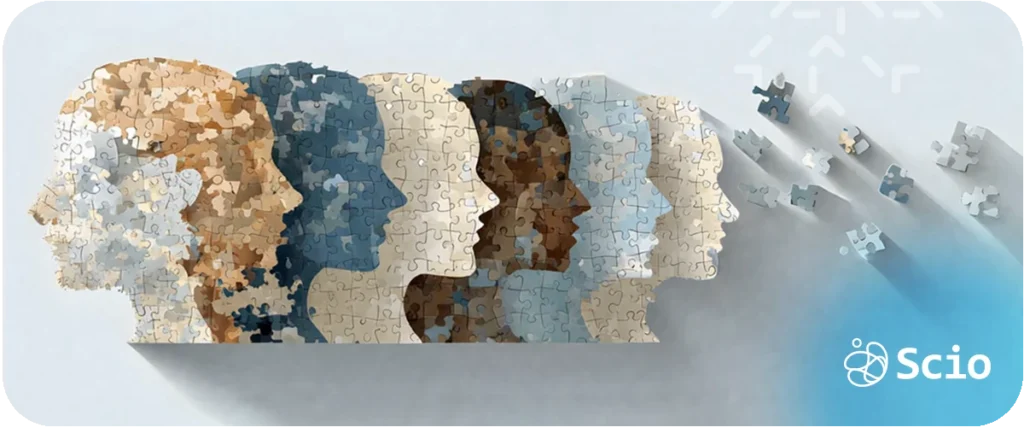
What she was experiencing is becoming more common in tech teams: working with people who think and operate differently. In other words, leading a neurodiverse workforce.
Table of Contents
1. The Shift Happening in Our Teams
Neurodiversity refers to the natural variation in how people think and process information. It includes conditions like ADHD, autism, and dyslexia, but also people without a formal diagnosis who still experience the workplace differently.
And this matters, because diagnosis is not always present, or disclosed. But as leaders, we manage people, not labels.
2. When the Signals Are Misleading
In engineering teams, we're used to reading certain behaviors as indicators of performance: speaking up, communicating proactively, managing time consistently. But what happens when someone produces great work and at the same time doesn't fit those signals?
You may see more direct communication, difficulty with prioritization, sensitivity to noise, or a strong need for structure. These are often interpreted as gaps. But many times, they are simply differences.
What you observe
Common interpretation
What it may actually mean
Quiet in meetings
Disengaged or unprepared
Processing differently; benefits from async input
Misses informal check-ins
Avoidant or uninterested
Unstructured social situations are genuinely harder
Direct, blunt communication
Unprofessional or abrasive
Preference for precision over social convention
Intense focus on a single task
Narrow or inflexible
Deep work preference; context-switching has a real cost
Struggles with shifting dates
Poor time management
Needs structured, explicit prioritization
Sensitivity to environment
Difficult or demanding
Sensory sensitivity, not attitude
This table is not a diagnostic tool. It is a reminder to pause before drawing conclusions. The wrong interpretation leads to the wrong intervention.
3. The Environment Is Often the Problem
Modern workplaces, especially in tech, can create unnecessary friction: constant interruptions, unclear expectations, shifting priorities, and heavy reliance on implicit communication. For some people, that's manageable. For others, it's simply overwhelming.
Add to this the fact that neurodiverse individuals are significantly more likely to experience anxiety and other psychiatric issues, and what looks like inconsistency can actually be someone navigating a system that wasn't designed with them in mind.
4. What Better Leadership Looks Like
Supporting neurodiversity is not about special treatment. It's about better management.
Focusing on clarity becomes essential. Being explicit about expectations, priorities, and outcomes removes guesswork. Flexibility becomes a performance tool. Not everyone works best in the same way, and rigid structures can limit output without anyone realizing it.
And perhaps most importantly, leaders need to shift from judgment to curiosity. Instead of asking "What's wrong?", ask "What does this person need to do their best work?" That question produces a different kind of conversation and a different kind of outcome.
Organizations that have embraced this approach, like Dell and IBM, are already seeing the impact on innovation and performance. Not as a side effect. As a direct result.
5. The Manager's Role and Its Limits
As a manager, your role is to create the conditions for success, not to diagnose people.
That means listening, being informed, and guiding people toward professional support when needed. It also means continuing to build your own skills. Most of us were never taught how to support someone dealing with anxiety, time management challenges, or recurring setbacks. But we can learn.
Mid-market engineering teams operate with lean management structures, which makes this even more relevant. There's rarely a dedicated DEI function to lean on. The manager is the system.
6. When Your Team Meets the Outside World
Even if you build an inclusive environment internally, your team doesn't work in isolation. Clients and stakeholders may not share the same understanding of neurodiversity. What is normal inside your team can be misinterpreted outside of it. Direct communication could be seen as rudeness. Quiet participation as disengagement.
Part of your role as a leader is managing that interface. That might mean setting expectations with clients, providing context when needed, or coaching your team through those interactions when useful. But without asking them to fundamentally change who they are.
Because inclusion doesn't stop at the team boundary.
7. When Neurodivergence Impacts Performance
Here's the nuance. Many performance issues are actually mismatches between the person and the environment. When you improve clarity, structure, and flexibility, performance often improves. But not always.
Supporting neurodiversity does not mean lowering expectations. It means making them clear, fair, and achievable. If favorable conditions are in place and performance is still not where it needs to be, that needs to be addressed, just as it would for anyone else. With empathy, but also with accountability.
The distributed engineering teams I've worked with closest to this challenge are the ones that got this balance right: they invested in the environment first, and only then evaluated the person.
Frequently Asked Questions
How do I know if someone on my team is neurodivergent?
In most cases, you won't. Diagnosis is rarely disclosed, and it's not your role to ask. Focus on behavior and environment, not on labels. If someone discloses a diagnosis or requests formal accommodations, involve HR and build a plan from there.
Does supporting a neurodiverse workforce mean accepting lower standards?
No. It means making standards explicit, fair, and consistently communicated. Ambiguity is not a neutral default, it's a design choice that disadvantages some people more than others. Clear expectations benefit everyone.
What is one thing I can do differently starting tomorrow?
Write things down more. Define what done means for every task. Send a written summary after every key conversation. These small changes reduce the ambient ambiguity that creates friction for neurodivergent team members, and they cost nothing.
Are there legal obligations I should be aware of as a manager?
In the United States, many neurodevelopmental conditions qualify as disabilities under the Americans with Disabilities Act. If a team member formally requests accommodations, the company has obligations. Don't handle accommodation requests alone. Involve HR and, when needed, legal counsel.
A Final Thought
Neurodiversity is not an edge case anymore. It's part of the reality of modern teams.
And the leaders who learn to work with it, rather than against it, will not only build more inclusive teams. They will build better ones.
If this resonates with how you're thinking about your engineering organization, I'd be glad to talk.
AI is everywhere right now. It is in our tools, our workflows, our conversations, and increasingly, in the way we think about work itself. And yet, many people feel more disconnected at work than they did before. That tension is not a coincidence. It is a structural consequence of how AI changes the nature of coordination, and understanding it is one of the more important leadership challenges of this moment.
AI is genuinely good at what it does. It gives us speed, recognizes patterns we would miss, scales output in ways that were unthinkable just a few years ago, and frees up time and mental energy. But there is something important it does not do and cannot do. AI cannot feel, and therefore it cannot grasp context emotionally. It does not read the room. It cannot build trust on its own. That gap matters more than we might expect, and it is why human connection at work becomes a competitive advantage precisely when AI is most prevalent.
Table of Contents
When Automation Grows, Connection Quietly Shrinks
One of the promises of AI is that it frees up space in our work lives. Fewer manual steps. Fewer dependencies. Sometimes even fewer people to coordinate with. But there is a quieter side effect: as coordination decreases, so does human connection. Less collaboration can mean fewer moments to exchange ideas, fewer chances to feel seen, and fewer opportunities to build shared meaning.
Over time, this can leave people feeling less ownership over their work, less mastery and pride, and less visible and valued. And here is the paradox: the very efficiency that AI brings can unintentionally create a sense of emptiness at work. Because the only thing that truly compensates for that loss is the experience of being in genuine relationship with other people. Being seen. Being heard. Being valued. No dashboard metric captures that.
Human Connection Is Not Optional for Wellbeing
Humans do not flourish in isolation, no matter how capable and independent they are. We are social beings and need connection to thrive. This is not sentimental. It is a biological and psychological fact. Truly relating to other people, feeling understood, appreciated, and connected, is a key pillar of balanced health and wellbeing. It regulates stress. It builds resilience. It gives meaning to effort.
And the data backs this up: 94 percent of employees say feeling connected to colleagues makes them more productive, four times more satisfied, and half as likely to quit. AI can support our work, but it cannot replace the experience of being in relationship with other humans. When human connection at work erodes, wellbeing follows. And organizations often notice it only when burnout, disengagement, or attrition are already high. That is where leadership becomes more important, not less.
The Changing Role of Leadership in an AI World
One surprising effect of AI is that it does not reduce uncertainty. On the contrary, it amplifies ambiguity. With so much information available instantly, we face more decisions: What do we trust? What do we automate? What do we keep human? What really matters here? Making those decisions requires something AI does not handle well at all: trust. Trust is relational. It lives in conversations, in the way we handle conflict, in the care we show when things are hard.
When knowledge is abundant and easy to access, leadership shifts away from being the expert with answers and toward sense-making, emotional regulation, creating spaces where people think together, and coaching and fostering human development. In my experience working with teams, I have learned that most of the time they do not fail because they lack tools. They fail because they lack connection, clarity, and trust.
Human connection is a performance multiplier. Teams that trust each other, feel seen by their leaders, and know their work matters move faster, solve problems more creatively, stay together longer, and burn out far less. No algorithm can replace that.
The Business Case for Connection When AI Is Widespread
There is also a very practical, bottom-line reason to invest in human connection. Businesses need diverse ideas, and these usually come from people with different backgrounds, experiences, cultures, and ways of thinking. Those ideas are richer and more generative than anything AI can produce on its own.
When we rely too heavily on algorithms, we risk creating intellectual silos: narrow perspectives, recycled patterns, and less creative friction. Innovation does not come from optimization alone. It comes from people truly understanding and appreciating different viewpoints and working through complexity together. In this age of AI, facilitating human connection at work is not a soft initiative. It is a necessary capability for sustained innovation.
Connection is not a perk. It is a competitive advantage. And it becomes more valuable the more AI is embedded in how work gets done.
What Organizations Can Do: 5 Practical Starting Points
If remote or hybrid work is here to stay and AI continues to grow, then we have to be intentional about protecting and strengthening human connection. This does not require large programs or complex frameworks. A few places to start:
Be mindful of how much time we spend interacting with actual people rather than tools. Track the ratio and treat it deliberately.
Invest in developing skills that involve human connection: leadership, collaboration, coaching, and active listening.
Institute regular wellbeing check-ins, especially one-on-one. Not to track performance, but to genuinely connect with the person in front of you.
Encourage more frequent in-person interactions when possible. Even occasional moments together, a quarterly offsite, a shared lunch, make a measurable difference in distributed team cohesion.
As leaders, model the behavior. Reach out. Ask questions. Be present. Be curious about the people around you. Connection starts at the top and rarely spreads upward.
What This Means for Engineering Leaders
Mid-market software companies
For mid-market software companies the connection challenge is most acute in fast-scaling environments where hiring pace, tool adoption, and delivery pressure all accelerate simultaneously. The engineering leaders who invest in team rituals, one-on-ones, and deliberate cross-team interaction during growth phases retain their best engineers longer and build the trust that makes execution more resilient. AI adoption without connection investment produces the kind of high-output, low-trust environment that erodes over time.
A nearshore dedicated engineering team built with cultural alignment and intentional collaboration practices extends the connection investment rather than diluting it. The partnership works best when both sides treat human connection as part of the delivery model, not a separate cultural program.
PE-backed software portfolios
For PE-backed software portfolios human connection aggregates as an execution risk. PortCos with high engineering attrition, low team cohesion, and weak leadership culture carry hidden costs that compound across the hold period: slower delivery, higher recruitment overhead, knowledge loss, and the morale erosion that makes every organizational change harder. Investing in connection practices at the PortCo level, through manager development, team rituals, and leadership coaching, protects the human capital that holds everything else together.
If you want to discuss how Scio approaches this in distributed team environments and what we have learned building nearshore engineering partnerships over two decades, our team would be glad to talk.
Frequently Asked Questions
Why does connection at work become more important as AI adoption increases?
Because AI reduces the coordination-based interactions that naturally created connection in traditional work environments. When fewer people need to collaborate on a task, the incidental relationship-building that used to happen through coordination disappears. Leaders who do not replace this deliberately with intentional connection practices find their teams feeling isolated, undervalued, and disengaged, even when output metrics look healthy.
What does the data say about connection and employee performance?
Research consistently shows that employees who feel connected to their colleagues are measurably more productive, more satisfied, and significantly less likely to leave. A widely cited figure shows that 94 percent of employees report feeling more productive when they feel connected, along with four times higher satisfaction and half the attrition risk. These effects are not soft outcomes. They translate directly into delivery reliability, knowledge retention, and the organizational stability that engineering leaders depend on.
How should engineering leaders change their approach in an AI-first environment?
By shifting emphasis from being the expert with answers to being the person who creates the conditions for clarity, trust, and thinking together. As knowledge becomes easier to access through AI, the distinctly human skills of sense-making, emotional regulation, coaching, and genuine listening become the primary leadership value-add. The leaders who thrive in AI-heavy environments are those who invest as deliberately in relationship quality as they do in tooling and process.
Can remote and nearshore teams maintain strong human connection?
Yes, when connection is treated as a design decision rather than a byproduct of proximity. Remote and nearshore teams that build connection into their collaboration structure through deliberate rituals, regular one-on-ones, cultural alignment practices, and occasional in-person interaction achieve the same cohesion benefits as co-located teams. The key is intentionality. Connection does not happen automatically at a distance. It has to be designed and actively maintained by leadership.
What is the risk of prioritizing AI efficiency over human connection?
The primary risk is the erosion of the relational trust that makes teams effective under pressure. Organizations that optimize entirely for efficiency through AI often find their teams are fast but fragile: capable in stable conditions but brittle during complexity, change, or crisis. The teams that navigate difficulty best are the ones where people know each other, trust each other, and feel genuinely invested in shared outcomes. That foundation is built through connection and cannot be assembled after the fact when it is needed most.
Connection Is the Competitive Advantage AI Cannot Replicate
AI will continue to get better, faster, and more powerful. But as it does, our need for human connection at work does not shrink. It grows. The organizations that will thrive in an AI-driven world will not be the ones that automate the most. They will be the ones that remember what makes work meaningful in the first place.
And that, fundamentally, is human connection. The trust built through honest conversations. The meaning created through shared effort. The belonging that comes from being genuinely seen and valued by the people around you. No model, no matter how capable, can replicate those things. But every leader can invest in them.
BetterUp, Connection in the Workplace Report. Research reporting that 94 percent of employees feel more productive when connected to colleagues, along with the satisfaction and retention effects of workplace connection. https://www.betterup.com/
Harvard Business Review, Loneliness and Performance at Work Research. Analysis of how workplace isolation affects productivity, engagement, and retention, with specific relevance to the accelerating disconnection that AI-driven automation creates in knowledge-work environments. https://hbr.org/
Gallup, State of the Global Workplace Report. Annual research on employee engagement, the role of manager relationship quality in team performance, and the connection factors most associated with retention and discretionary effort. https://www.gallup.com/
MIT Sloan Management Review, AI and Human Collaboration Research. Analysis of how AI adoption affects team dynamics, leadership requirements, and the organizational practices that preserve the human connection that AI-augmented teams depend on. https://sloanreview.mit.edu/
American Psychological Association, Social Connection and Health Research. Research on the psychological and biological necessity of human connection for wellbeing, stress regulation, and resilience, directly relevant to the connection imperative in AI-heavy work environments. https://www.apa.org/
DORA (DevOps Research and Assessment), State of DevOps Report. Research showing that generative culture, psychological safety, and team belonging, all expressions of connection, are among the strongest predictors of high software delivery performance. https://dora.dev/publications/
Scio blog, Engineering Team Culture: 5 Proven Collaboration Wins. How the team rituals, communication practices, and belonging-building behaviors that constitute engineering culture connect directly to the delivery quality and retention outcomes that connection research predicts. https://sciodev.com/blog/engineering-team-culture/
Scio blog, Distributed Team Connection: 5 Proven Ways to Build Trust Across Screens. How distributed engineering teams build and maintain the human connection that makes remote and nearshore collaboration feel genuinely cohesive rather than transactional. https://sciodev.com/blog/distributed-team-connection/
I listened to a great talk at LeadDev NY 2025 recently. It introduced me to the concept of conflict debt in teams: the accumulation of unresolved issues, disagreements, or tough conversations that people avoid addressing. As with financial debt, conflict debt also accumulates interest, but in the form of resentment, lack of trust, and poor collaboration.
Psychologists say conflict is to be expected in any healthy relationship, and it can even be welcomed when we have the necessary skills to deal with it. Handled well, conflict can deepen trust and strengthen connections. Handled poorly, it escalates into low performance at work, poor collaboration, and negative impacts on mental and physical health. Facing conflict head-on is not easy, and that is one of the reasons many of us choose to avoid it, letting conflict debt in teams quietly build.
Table of Contents
Is Your Team Accumulating Conflict Debt?
Let us start by identifying whether your team might already be accumulating conflict debt. This is simpler than it sounds. One way to check is by sending an anonymous survey with these statements. If most of your team answers yes, you are likely in good shape: team members address the root causes of conflicts rather than just the symptoms, team members embrace disagreement and address issues directly, team members clearly communicate their expectations of each other, and team members regularly provide feedback on each other's work.
Otherwise, the patterns below are worth a closer look.
What Conflict Debt Looks Like in Practice
I once worked with a team where one developer consistently imposed his technical views. He was confident, decisive, and assertive, but when others expressed concerns, he did not really listen. The rest of the team had a more accommodating style, and instead of pushing back, they chose to avoid the conflict in order to move forward.
Months later, the solution failed to scale. The team had to rework large parts of the system, working long hours to fix issues that could have been addressed much earlier. What was avoided in conversation showed up later as extra effort, frustration, and burnout. That is conflict debt. When the leader and I reflected on what had happened, the lesson was clear: conflict was not the problem. Avoiding it was.
Communication Styles and Conflict
The way a person communicates is closely related to how they deal with conflict. Over time, we each develop a default communication style. Assertive means expressing thoughts and needs clearly and respectfully, while also listening to others. Passive means holding back opinions or needs to avoid tension, even when something matters. Aggressive means pushing a message forcefully, often dismissing or overpowering others. Passive-aggressive means avoiding direct confrontation but expressing disagreement indirectly through sarcasm, silence, or resistance.
None of these styles are inherently right or wrong, but becoming aware of your default pattern is the first step toward communicating more intentionally under pressure.
Conflict Management Styles
This brings us to conflict management styles. We are social beings, and we start learning how to manage conflict very early in life, often within our families. In 1974, Kenneth W. Thomas and Ralph H. Kilmann introduced five conflict styles that continue to be the preferred classification: competing, where I pursue my own position even at the expense of others; avoiding, where I sidestep the conflict altogether; accommodating, where I prioritize the other person's needs over my own; compromising, where we each give up something to reach a middle ground; and collaborating, where we work together to fully address both sides' concerns.
As a team leader, it is important to be familiar with these styles and to observe both yourself and your team in how you communicate and react to conflict. While every style has its place, collaborating is usually the one to aim for in a high-performing team, and leaders can model this for the rest of the team.
A Second Example: When No One Names the Problem
In a different situation, I once coached a team where one member consistently showed low productivity. Everyone noticed it, but no one named it. Most of the team had an accommodating, non-confrontational style, so they absorbed the extra work and hoped things would improve on their own. They did not.
The team fell behind, tension grew, and eventually the client became unhappy. What started as discomfort inside the team turned into a delivery and trust issue on the outside. When they finally had the difficult conversation, expectations were made explicit, goals were clarified, and support was offered. Performance improved, and the team recovered. The insight was simple: even in high-performing teams, expectations drift. Setting and resetting expectations is not a one-time event. It is ongoing leadership work.
5 Signs Leaders Often Miss Before Conflict Debt Accumulates
Disagreements that resolve too quickly. When a tense discussion ends faster than the topic warrants, it often means someone deferred rather than genuinely agreed.
Quiet absorption of extra work. When one or two people consistently pick up slack without anyone naming why, accommodation is masking a performance or expectation gap.
Feedback that only flows upward in formal reviews. If feedback only happens during scheduled reviews rather than in the normal flow of work, the team has likely built informal rules against addressing things directly.
Recurring rework on the same type of issue. When the same category of problem resurfaces project after project, it usually means the root disagreement was never actually resolved, just postponed.
A drop in spontaneous disagreement during meetings. Healthy teams disagree out loud. When meetings become unusually smooth and conflict-free, it is worth asking whether people stopped raising concerns rather than stopped having them.
What This Means for Engineering Leaders
Mid-market software companies
For mid-market software companies conflict debt shows up most visibly during incident response and architecture decisions, exactly the moments when a dissenting technical opinion needed to surface earlier. Engineering leaders who build regular, low-stakes opportunities for disagreement into their team rituals catch the small frictions before they compound into the kind of rework this article describes.
In distributed and nearshore engineering teams conflict debt can build even more quietly because the informal hallway conversations that surface tension in co-located teams do not exist in the same way. Building explicit feedback rituals matters more, not less, in these environments.
PE-backed software portfolios
For PE-backed software portfolios conflict debt across PortCo engineering teams often surfaces during post-acquisition integration, when accommodating team members absorb the friction of merging different technical standards rather than naming the disagreement directly. Operating partners who build conflict awareness into engineering leadership development reduce the rework and trust erosion that integration periods otherwise produce.
What is conflict debt and how is it different from normal team disagreement?
Conflict debt is the accumulation of unresolved issues, disagreements, or difficult conversations that a team consistently avoids addressing. Unlike a single unresolved disagreement, conflict debt compounds over time the way financial debt does, except the interest takes the form of resentment, lack of trust, and poor collaboration rather than monetary cost.
How can a team leader tell if their team is accumulating conflict debt?
A simple anonymous survey works well: ask whether team members address root causes rather than symptoms, embrace disagreement directly, communicate expectations clearly, and give each other regular feedback. If most answers are no, conflict debt is likely building. Recurring rework on similar issues and meetings that feel unusually smooth and friction-free are also reliable signals.
What are the five conflict management styles and which one works best for teams?
The five styles, introduced by Kenneth Thomas and Ralph Kilmann, are competing, avoiding, accommodating, compromising, and collaborating. Every style has situations where it is useful, but collaborating, where both sides' concerns are fully addressed together, is generally the style that produces the healthiest outcomes for high-performing teams, and leaders are well positioned to model it.
Why do accommodating team members create hidden risk?
Because they absorb tension rather than surface it, which prevents the team and its leader from seeing a problem that is actively affecting delivery. The cost does not disappear. It shows up later as burnout, missed deadlines, or a client relationship that erodes quietly before anyone names what went wrong internally.
How often should teams reset expectations to prevent conflict debt?
Regularly, not just once at the start of a project. Expectations naturally drift as teams grow, priorities shift, and pressure increases. Treating expectation-setting as ongoing leadership work, rather than a one-time kickoff exercise, is one of the most effective ways to prevent the kind of conflict debt that builds from assumptions no one revisited.
Let Us Slow Down and Listen
Conflict debt does not show up all at once. It builds quietly, conversation by conversation, moment by moment. As a team leader, your role is not to eliminate conflict, but to make it safe, visible, and workable. When you slow down to listen, invite disagreement, and reset expectations, you are not creating friction. You are protecting trust, performance, and people.
The teams that grow strongest are not the ones that avoid hard conversations. They are the ones that learn to have them well. If this is something your team is navigating, I would be glad to talk through it.
References and Further Reading
Harvard Program on Negotiation, Conflict Management Styles Research. Research on conflict management approaches in professional settings, including the pitfalls and best practices relevant to the communication style patterns described in this article. https://www.pon.harvard.edu/
American Psychological Association, Conflict and Workplace Relationships Research. Research on how unresolved conflict affects mental health, team trust, and collaboration quality, supporting the conflict debt framework described in this article. https://www.apa.org/
Google re:Work, Psychological Safety and Team Performance Research. Research identifying psychological safety as the top predictor of team effectiveness, directly relevant to why teams that can surface disagreement safely outperform those that avoid it. https://rework.withgoogle.com/
Center for Nonviolent Communication, NVC Framework. Framework for direct, respectful communication that supports the assertive communication style this article identifies as most effective for addressing conflict constructively. https://www.cnvc.org/
Gallup, Employee Engagement and Manager Relationship Research. Research on how manager-employee relationship quality, including how conflict and feedback are handled, affects engagement, retention, and team performance. https://www.gallup.com/
Scio blog, Tech Lead Anxiety: 5 Real Patterns and How Leaders Recover. How unresolved tension and unspoken expectations contribute to the anxiety patterns this article connects to unaddressed conflict debt. https://sciodev.com/blog/tech-lead-anxiety/
Scio blog, Emotional Intelligence in Software Engineering: 5 Real Patterns. How emotional intelligence supports the assertive, collaborative communication style this article identifies as the healthiest approach to team conflict. https://sciodev.com/blog/emotional-intelligence-software-engineering/