In today's technology environment, long hours in front of a screen are part of the job. Developers move between deep focus, problem-solving, meetings, and asynchronous collaboration across time zones. Over time, this constant mental load can affect both physical and emotional wellbeing, especially when there is little space to disconnect.
At Scio, software developer wellbeing is not a side program or a benefit checkbox. It is part of who we are. Supporting people intentionally, inside and outside of work, shapes how our collaborators experience their daily lives, how they connect with each other, and how they show up for the work that matters.
Table of Contents
Mental Fitness as Part of Overall Wellbeing
Software development is mentally demanding. Developers navigate complexity, ambiguity, and constant change. Without proper balance, this can lead to mental fatigue, emotional exhaustion, and disconnection, not only from work, but from personal life as well.
At Scio, we approach mental fitness first and foremost as a health topic. Physical activity supports emotional regulation, mental clarity, and stress management, helping people feel better in their daily lives. When collaborators feel healthier and more balanced, positive outcomes follow. But those outcomes are a result, not the goal. The goal is simply to support people as people.
Movement as Space for Recovery and Balance
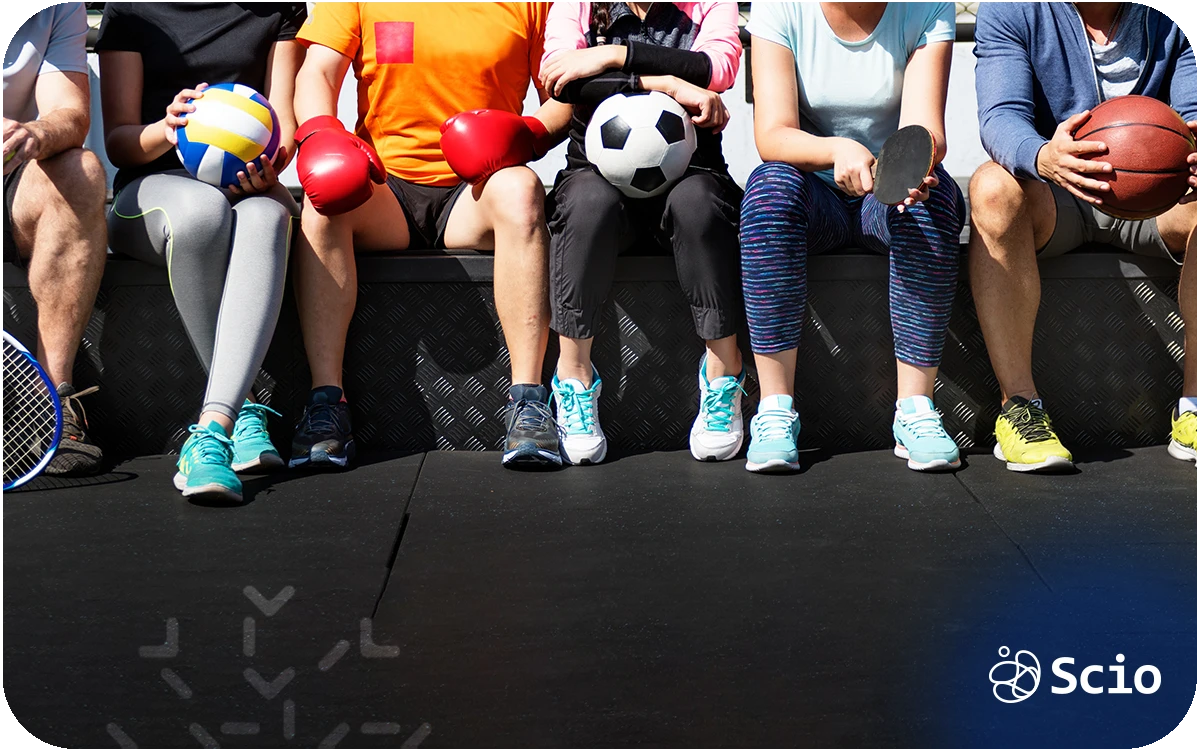
Encouraging movement is not about routines, metrics, or expectations. It is about creating space. Physical activity gives people a chance to step away from the screen, reconnect with their bodies, and clear their minds. For many, it becomes a moment to breathe, reset, and create healthier boundaries between work, personal time, and social life.
From a people and culture perspective, this is about prevention and care. Supporting movement helps reduce burnout risk and promotes more sustainable rhythms, where work fits into life rather than the other way around. That philosophy shapes every wellbeing initiative at Scio.
Scio Active: Moving Together, Wherever We Are
Scio Active is one of our core wellbeing initiatives and a reflection of this people-first mindset. Twice a year, we run Scio Active as a 12-week challenge open to all Scio collaborators, regardless of role, location, or fitness level. Each participant defines a personal goal that fits their own life and circumstances. Walking, running, yoga, cycling, gym workouts, any form of movement is valid.
What matters is not intensity or performance. It is participation. By sharing the same challenge timeline, collaborators across different countries and cities become part of a shared experience. This creates distributed team connection through movement, helping people feel included and connected even in remote and nearshore environments where physical proximity is not possible.
Team Sports: Connection Beyond Work
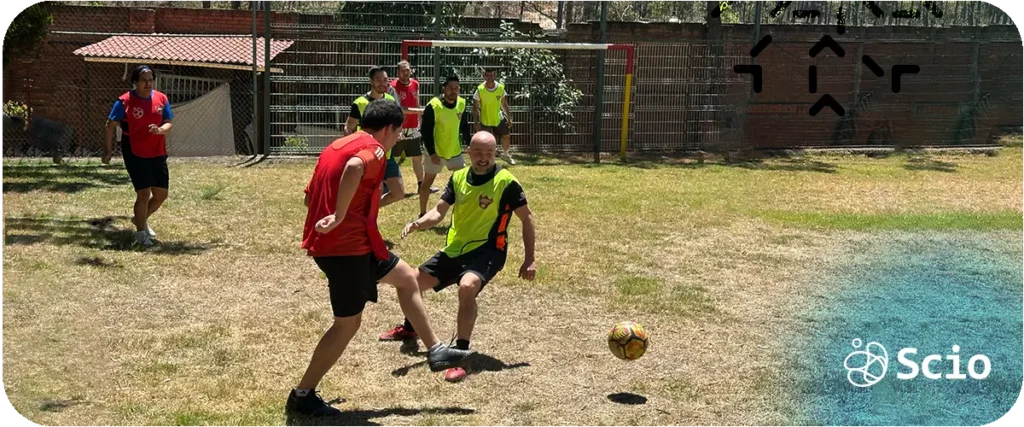
In addition to individual initiatives, Scio supports weekly football and padel activities. These spaces are intentionally informal and human. They are not about competition or results, but about:
- Spending time together outside of work
- Building genuine relationships that extend beyond job titles
- Encouraging teamwork, support, and camaraderie
- Creating a sense of belonging that carries into daily collaboration
Team sports help people connect beyond their roles and responsibilities. The conversations, the shared effort, and the informal moments build the relational trust that makes professional collaboration easier and more honest. For a distributed organization, these touchpoints are particularly valuable.
Wellbeing as Foundation for a Healthy Work Culture
Physical activity also supports mental wellbeing by offering a healthy way to disconnect from work pressures. Moving the body, socializing, and sharing moments with teammates help reduce stress and support emotional balance. By focusing on health, mental wellbeing, and social connection, Scio aims to improve quality of life first. When people feel better in their lives, feeling better at work becomes a natural outcome, not something forced or measured.
This philosophy also reduces burnout risk at the organizational level. Burnout in engineering teams is not primarily caused by hard work. It is caused by sustained mental overload without recovery space, unclear boundaries between work and personal time, and a lack of genuine human connection. Wellbeing programs that address all three dimensions, physical activity, personal balance, and team connection, address the root causes rather than the symptoms.
Cultural Alignment in Nearshore Software Teams
At Scio, wellbeing initiatives are not isolated programs. They are part of our culture. Whether someone works onsite, remotely, or as part of a nearshore team, they experience the same commitment to care, balance, and human connection. This consistency strengthens cultural alignment across distributed teams, ensuring that everyone feels supported and included regardless of location.
For engineering leaders evaluating nearshore partners, culture and wellbeing practices are a reliable signal of how a company treats its people. Organizations that invest in developer wellbeing produce lower attrition, stronger team cohesion, and more consistent delivery quality. The connection between individual wellbeing and organizational delivery performance is not abstract. It shows up in retention rates, in the quality of collaboration, and in the institutional knowledge that stays with the team over time.
What This Means for Engineering Leaders
Mid-market software companies
For mid-market software companies evaluating nearshore partners, the wellbeing culture of a partner organization directly affects the attrition risk, team stability, and collaboration quality of the engineering teams you depend on. High-turnover engineering environments create the knowledge loss and delivery disruption that cost more than the apparent savings. Partners that invest in their people retain the engineers who understand your product, your architecture, and your team's communication norms.
A nearshore dedicated engineering team from an organization with strong wellbeing culture produces measurably better retention and more consistent long-term performance.
PE-backed software portfolios
For PE-backed software portfolios engineering team health aggregates across the portfolio. PortCos with high engineering attrition carry hidden execution risk that affects delivery predictability and increases the cost of every knowledge transfer. Nearshore partners with demonstrated wellbeing culture reduce this risk by building the retention and team stability that protects institutional knowledge.
If you want to understand how Scio's culture and wellbeing practices translate into delivery reliability for your engineering organization, our team would be glad to share more.
Frequently Asked Questions
Why does physical activity matter for software developer wellbeing?
Because software development imposes sustained mental load that accumulates over time. Physical activity provides a genuine recovery pathway, helping developers regulate stress, restore mental clarity, and maintain the emotional balance that complex problem-solving requires. Organizations that support physical activity as part of wellbeing culture see lower burnout rates, better retention, and more sustained team performance than those that treat wellbeing as a personal responsibility.
How does Scio Active work and who can participate?
Scio Active is a 12-week challenge run twice a year and open to all Scio collaborators regardless of role, location, or fitness level. Each participant defines a personal goal that fits their own life: walking, running, yoga, cycling, gym, or any other form of movement. The shared challenge timeline creates a collective experience that connects collaborators across different countries and cities, reinforcing team belonging across distributed environments.
How does developer wellbeing culture affect nearshore engineering team performance?
By reducing attrition, strengthening team cohesion, and maintaining the institutional knowledge that distributed teams depend on. When engineers feel genuinely supported as people, they stay longer, collaborate more openly, and contribute more consistently to the product and architecture knowledge that makes delivery reliable. For engineering leaders, partnering with an organization that invests in wellbeing culture reduces the retention and knowledge-continuity risks that undermine long-term delivery.
How does Scio build team connection across distributed and remote environments?
Through a combination of shared rituals, regular collaboration practices, and wellbeing programs that create touchpoints across distance. Scio Active creates a shared experience across time zones. Weekly team sports create informal relationship-building moments for local teams. Daily collaboration rituals, standups, retrospectives, and informal check-ins, reinforce the human connection that makes distributed work feel genuinely collaborative rather than transactional.
Is wellbeing culture a meaningful signal when evaluating nearshore engineering partners?
Yes. Organizations that invest in wellbeing produce lower attrition and higher team stability, which directly affects the reliability and knowledge continuity of the engineering teams you depend on. High-turnover environments create delivery disruption, knowledge loss, and the overhead of constant onboarding. Evaluating a partner's wellbeing culture is a practical proxy for the retention and stability characteristics that determine long-term engagement quality.
Wellbeing Is Not a Feature. It Is a Foundation.
Great software is built by people who feel healthy, balanced, and connected. That belief is not aspirational at Scio. It is operational. By fostering physical activity, genuine human connection, and a culture of care, we support our collaborators as people first. That care reflects in the work they do, the teams they build, and the partnerships they sustain.
For technology leaders evaluating nearshore partners, software developer wellbeing culture is worth examining as a practical indicator of retention, team stability, and the kind of long-term partnership that compounds value over time rather than eroding it.
If you want to learn more about how Scio's culture translates into engineering team reliability, our team would be glad to talk.
References and Further Reading
- American Psychological Association, Physical Activity and Mental Health Research. Research on how regular physical activity affects stress regulation, emotional resilience, and cognitive performance in knowledge-work environments. https://www.apa.org/
- Harvard Business Review, Burnout and Organizational Culture Research. Analysis of how organizational culture practices, including wellbeing investment, affect burnout rates, retention, and knowledge-work performance over time. https://hbr.org/
- Gallup, Employee Wellbeing and Engagement Research. Annual research on how wellbeing culture affects engagement, retention, and the discretionary effort that distinguishes high-performing engineering teams from average ones. https://www.gallup.com/
- DORA (DevOps Research and Assessment), State of DevOps Report. Research showing that culture, psychological safety, and team belonging are among the strongest predictors of high software delivery performance, directly connecting wellbeing investment to delivery outcomes. https://dora.dev/publications/
- MIT Sloan Management Review, Team Culture and Distributed Work Research. Analysis of how belonging-building practices, shared rituals, and wellbeing investment affect distributed team cohesion and sustained performance over time. https://sloanreview.mit.edu/
- World Health Organization, Mental Health in the Workplace Research. Research on the organizational practices that reduce workplace mental health risks, including physical activity programs, boundary clarity, and team connection initiatives. https://www.who.int/teams/mental-health-and-substance-use/promotion-prevention/mental-health-in-the-workplace
- Scio blog, Emotional Intelligence in Software Engineering: 5 Real Patterns. How emotional regulation, stress management, and interpersonal awareness in engineering teams connect to the wellbeing culture that supports them. https://sciodev.com/blog/emotional-intelligence-software-engineering/
- Scio blog, Distributed Team Connection: 5 Proven Ways to Build Trust Across Screens. How distributed engineering teams build the human connection that wellbeing initiatives reinforce and that performance depends on over time. https://sciodev.com/blog/distributed-team-connection/